
The Crochet Tunisian Weave is the answer when you want a blanket or throw that feels both substantial and quietly sophisticated, without spending months at your hook. In this article, you will discover the materials, stitches, construction approach, and care tips that will carry you from your first foundation row to a finished piece worth keeping forever.

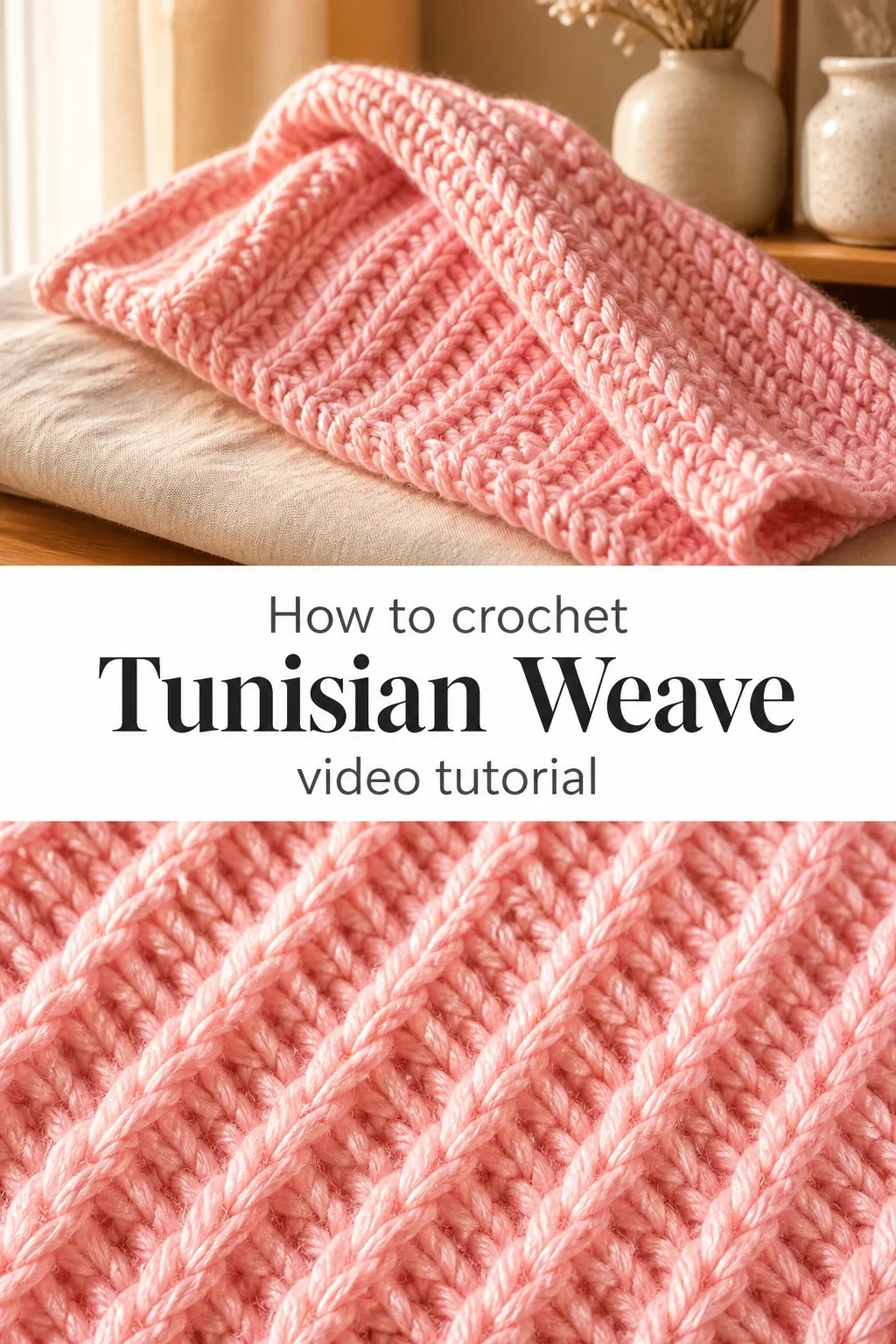
The Tunisian Weave
The Crochet Tunisian Weave is one of those textile experiences that stops people mid-touch, fingers instinctively tracing the raised diagonal columns that ripple across the surface like braided rivers caught in soft light. It belongs to the Tunisian crochet family, worked with a long Afghan hook that holds multiple live loops at once, producing a fabric that sits somewhere between woven cloth and traditional crochet. The result is airy yet structured, with a gentle loft that makes it ideal for blankets, throws, and wraps that feel genuinely luxurious to use. Whether you are an adventurous beginner ready to try your first Tunisian project or an intermediate crafter looking for a pattern with real visual reward, this one will meet you where you are.
Tunisian Weave Related Posts:
- Crochet Granny Square Blanket: A Timeless Classic Project
- Crochet Moss Stitch Blanket: A Textured Classic
- Crochet Textured Blanket: A Luxurious Handmade Essential
- Crochet Mile-A-Minute Blanket: A Bold Timeless Treasure
For color, think soft salmon, dusty rose, warm oat, and sage, shades that let the texture speak without competition. A single-color approach, as seen in the reference images with that beautiful blush pink, allows every twisted column and ribbed valley to catch the light on its own terms. If you want something bolder, a two-tone version in cream and terracotta, or slate and mustard, would make a genuinely striking heirloom throw.
Materials and Tools
For the Crochet Tunisian Weave blanket or throw, a worsted weight yarn is the most rewarding choice, giving the woven texture enough body to stand out without adding unnecessary bulk. A smooth cotton-acrylic blend works beautifully here, offering stitch definition that lets every column read clearly, and the slight sheen of a mercerized cotton can make the diagonal pattern look almost hand-woven. You will need a Tunisian Afghan hook in a 5mm or 5.5mm size, long enough to hold a full row of loops comfortably, and a stitch marker or two to keep your edges honest. For a standard lap throw, plan for approximately 400 to 600 meters of yarn depending on your finished dimensions.
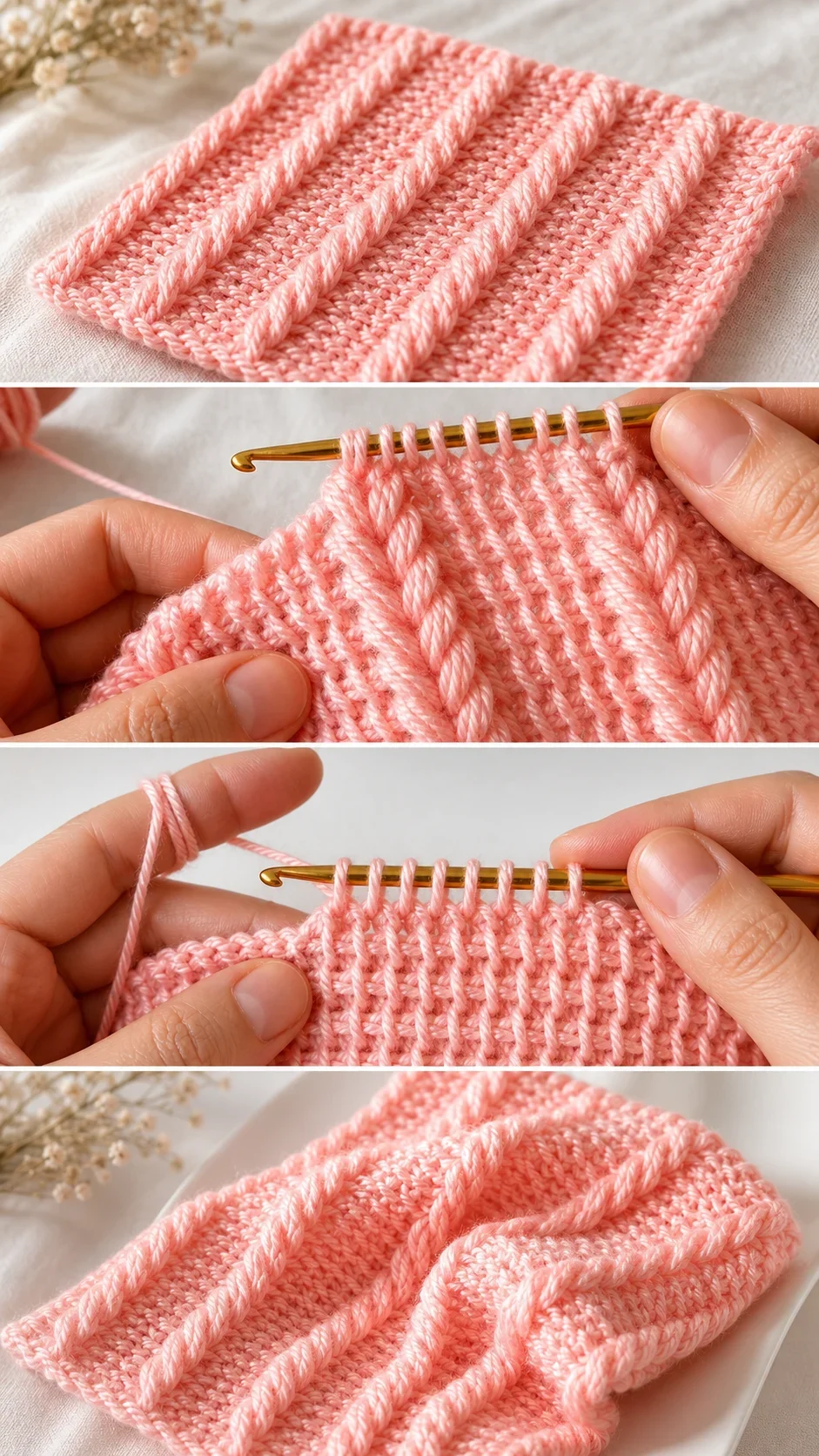
Stitch by Stitch
The Crochet Tunisian Weave draws on a small but purposeful vocabulary of stitches that work together to build its signature woven surface.
BULLET:TSS (Tunisian Simple Stitch) The foundational forward-pass stitch where the hook is inserted under the vertical bar of the previous row, picking up one loop and leaving it on the hook.
BULLET:TKS (Tunisian Knit Stitch) Worked by inserting the hook through the center of the stitch from front to back, this stitch creates a smooth knit-like column that forms the raised ridges in the weave pattern.
BULLET:TRS (Tunisian Return Stitch) The return pass where yarn is drawn through two loops at a time across the hook, effectively completing each row and building the woven fabric row by row.
BULLET:YO (Yarn Over) Used selectively within the Tunisian Weave structure to create the open channels between raised columns, giving the fabric its breathable, lattice-like quality.
There is a meditative rhythm to Tunisian crochet that is genuinely unlike any other technique, the long forward sweep gathering loops, then the steady return pass releasing them one by one, a back-and-forth that becomes almost automatic after a few rows.
Construction
The Crochet Tunisian Weave blanket is worked flat in a single panel, starting with a foundation chain sized to your preferred width and then building upward row by row using the forward and return pass system. Because Tunisian fabric has a natural tendency to curl at the edges, blocking your swatch before committing to a full project is genuinely important and will save you from surprises later. The pattern repeat is simple enough that most beginners find their footing within the first three or four rows, and the full stitch instructions, including exactly how to set up the weave columns and manage your edge stitches, are clearly shown in the video tutorial linked below. To customize your throw, simply adjust your starting chain in multiples of the pattern repeat to make it wider for a bed throw or narrower for a sofa lap blanket.
Wearing Your Tunisian Weave
Draped over the arm of a linen sofa, folded across the foot of a made bed, or wrapped around your shoulders on a cool evening with a cup of something warm, a finished Crochet Tunisian Weave throw earns its place in every corner of a home. The fabric is substantial enough to feel cozy in autumn but not so heavy that it feels oppressive in spring, making it genuinely year-round. Once you finish your first throw, the same stitch pattern scaled narrower makes an extraordinary scarf or shawl that pairs easily with a wool coat or an oversized knit.
Washing and Storing Your Tunisian Weave Throw
Because the Crochet Tunisian Weave produces a dense, layered fabric, wet blocking after finishing is the single best thing you can do for it, pinning the piece to its finished dimensions on a foam mat and allowing it to dry flat will relax the stitches and correct any curl from the Tunisian construction. For ongoing care, hand washing in cool water with a gentle wool-safe soap is ideal for natural fiber blends, while a cotton-acrylic yarn can usually tolerate a delicate machine cycle in a mesh laundry bag. Lay the throw flat to dry rather than hanging it, as the weight of a wet Tunisian fabric can distort the shape if left to drip. Store it folded loosely in a breathable cotton bag, away from direct sunlight, to keep the color true for years.
Every stitch you place in a Crochet Tunisian Weave piece is an act of genuine making, slow and considered and entirely your own. Save this article to your crochet board on Pinterest so you can find it whenever you are ready to cast on, and share your finished throw with the hashtag so the community can celebrate it with you.
Follow us on Pinterest and subscribe to the Newsletter so you don’t miss a thing!
Tutorial and photos of this tunisian weave by: AYŞENİN ÖRGÜLERİ.