
The Crochet Mesh Lace Shawl is the perfect solution for anyone who wants a wrap light enough for warm evenings yet graceful enough to feel like a keepsake. In this article, you will discover the look, materials, stitches, and construction behind this airy pink beauty, along with a free video tutorial to guide your hands.

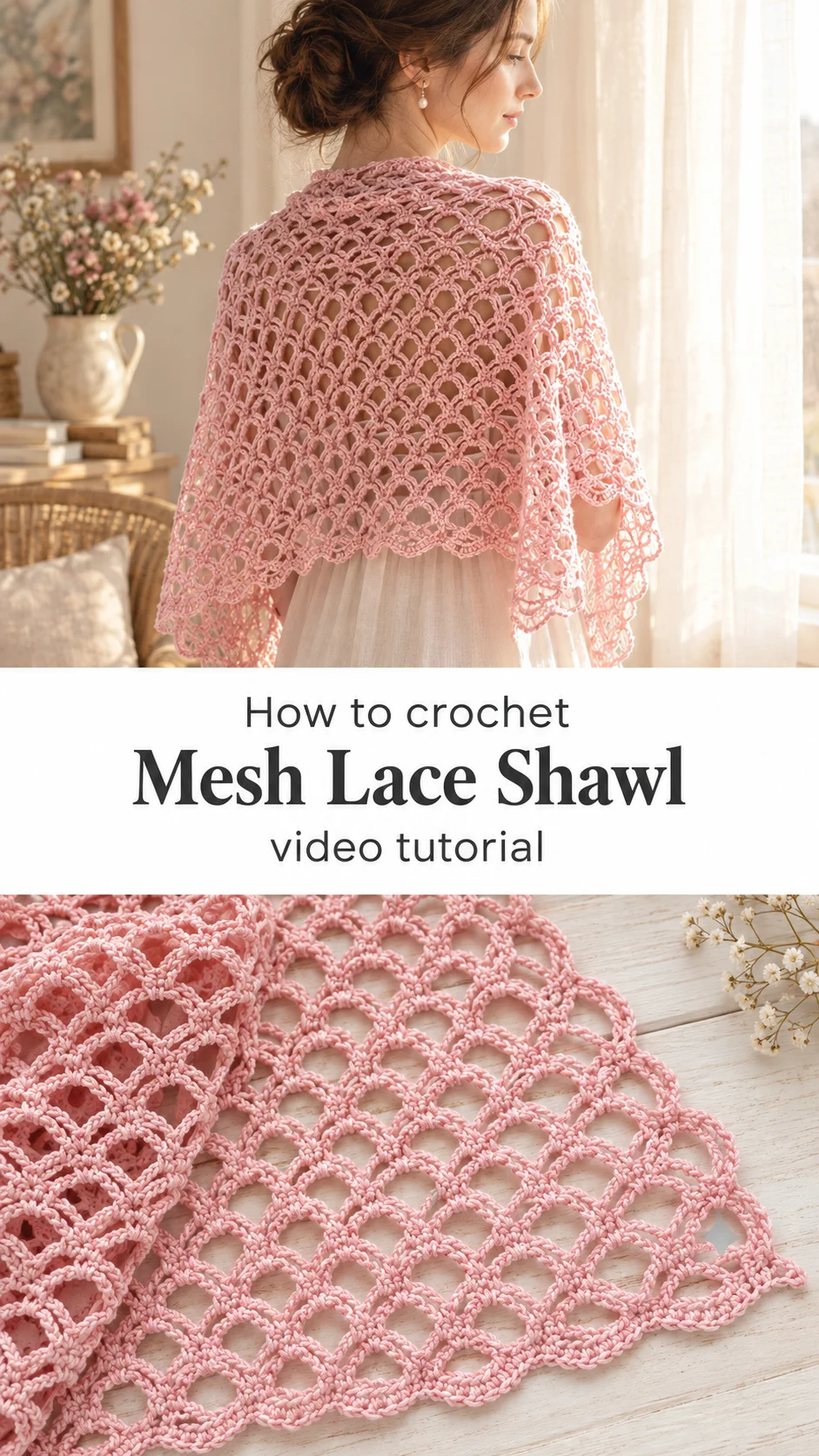
The Mesh Lace Shawl
Picture a soft blush web of scalloped arches, each one linked to the next like ripples on still water. This Crochet Mesh Lace Shawl is airy yet structured, with open spaces that let light pass through and a clean, firm edge that keeps the whole piece looking polished. It suits the crocheter who loves delicate work but still wants a rhythm she can settle into. Draped over the shoulders, it feels like a whisper of elegance rather than a heavy layer.
Blush pink is lovely, but this pattern shines in ivory, dusty lavender, sage, and soft butter yellow too. Choose a deeper wine or navy for evening, or a pale neutral that pairs with everything in your wardrobe. Wear it over a linen dress, a plain white tee, or a wedding gown, and it quietly does its magic.
Lace Shawl Related Posts:
- Crochet Tote Bag: A Practical Everyday Essential
- Crochet Lime Handbag: A Chic and Vibrant Accessory
- Crochet Tote Bag: A Stylish Everyday Essential
- Crochet Net Shoulder Bag: A Breezy Summer Essential
Materials and Tools
For a drape that stays fluid and lacy, choose a lightweight cotton or cotton blend in fingering or sport weight. Mercerized cotton gives a lovely sheen and crisp stitch definition, which really shows off the arches. Pair it with a 2.5mm hook for a fine, delicate fabric, or go up to a 3mm hook if you prefer extra softness and speed. A small pair of sharp scissors and a tapestry needle for weaving in ends are all the extras you will need.
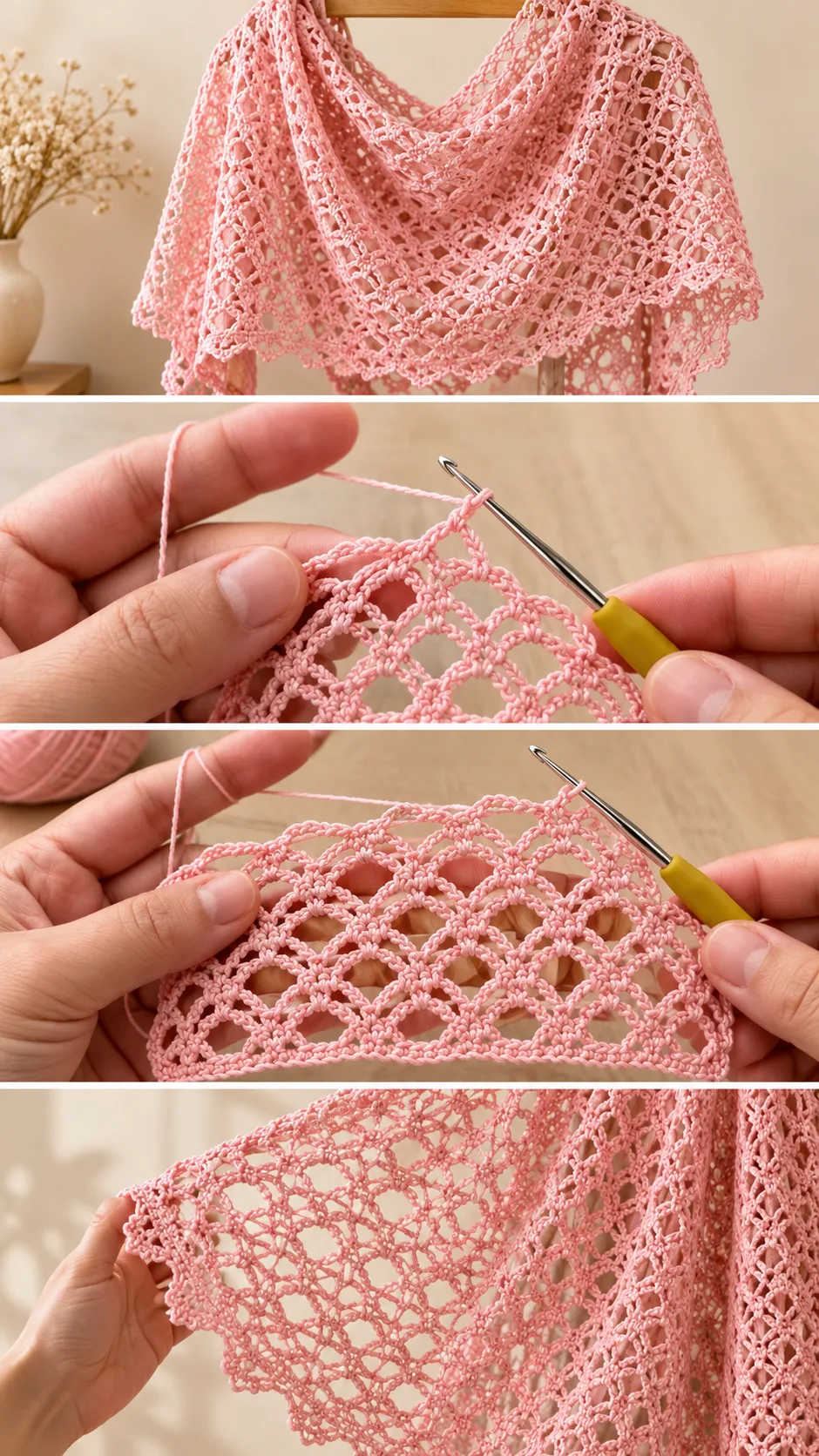
Stitch by Stitch
This Crochet Mesh Lace Shawl uses just a few simple stitches, combined in a repeating arch pattern.
- CH (chain) Forms the airy loops and arches that give the shawl its open, lacy character.
- SC (single crochet) Anchors each arch and builds the neat, firm base along the edges.
- DC (double crochet) Adds height to the clusters so the scallops stand tall and graceful.
- SL ST (slip stitch) Moves your yarn invisibly across the work and keeps the edges tidy.
Once the arch sequence settles into your fingers, the pattern becomes wonderfully meditative, each loop following the last in a calm, steady beat.
Construction
The shawl is worked flat from a foundation chain, building row upon row of interlocking arches until it reaches your desired size. Because the repeat is so consistent, it is very beginner-friendly once you have practiced a few rows. Make it narrow for a delicate scarf, or keep adding length and width for a full wrap. To customise, simply add or remove foundation chains in multiples of the pattern repeat, and follow the video tutorial for the complete stitch-by-stitch guide.
Wearing Your Mesh Lace Shawl
Drape it loosely over a sundress for breezy summer dinners, or fold it into a triangle and knot it at the shoulder for a boho look. It also makes a heartfelt bridal or bridesmaid accessory, soft enough to carry real sentiment. Once you see how it moves, you will want to cast on a second one right away.
Washing and Storing Your Lace Shawl
Hand wash your shawl in cool water with a gentle detergent, pressing the water through rather than wringing or twisting. Lay it flat on a clean towel, shape the scalloped edges with your fingers, and pin gently if you want crisp arches. Let it dry completely away from direct sun, then fold it loosely with a sheet of acid-free tissue paper. Store it in a breathable cotton bag so the lace stays fresh and its shape stays beautiful.
Every arch you crochet is a small act of patience, and the finished shawl carries all of that quiet care. Save this Crochet Mesh Lace Shawl to your Pinterest crochet board and share your own version with us when it is done.
Follow us on Pinterest and subscribe to the Newsletter so you don’t miss a thing!
Tutorial and photos of this mesh lace shawl by: Crochet Knitting Therapy .