
This Crochet Lace Stitch builds its beauty through layered petal-like clusters arranged in a honeycomb rhythm, creating fabric that feels simultaneously airy and structured. From table runners to window curtains, shawls to decorative cushion covers, this single pattern opens a whole world of handmade home decor possibilities.

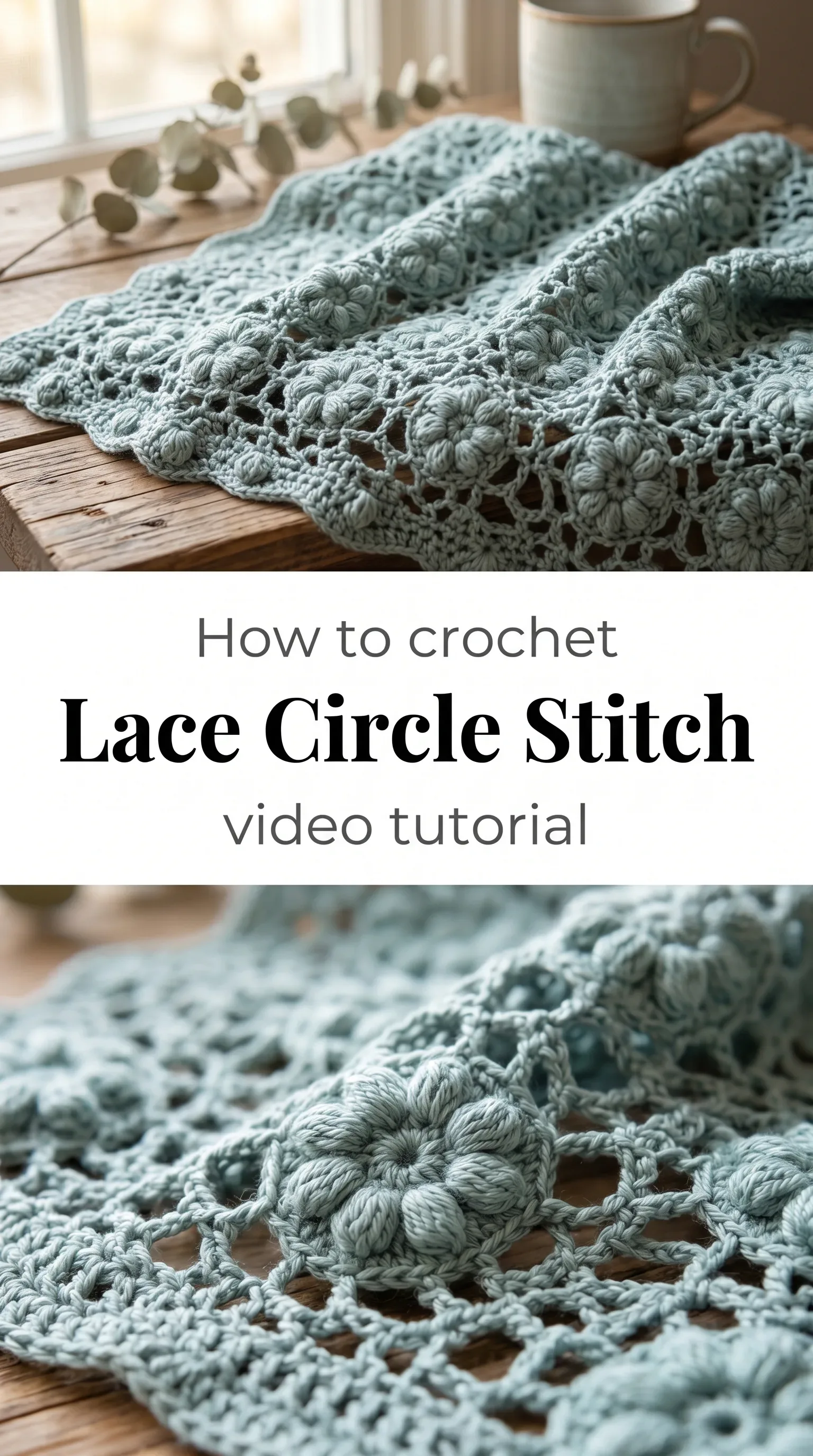
The Lace Stitch
This Crochet Lace Stitch is the kind of pattern that stops people mid-scroll, the kind that makes someone lean closer and ask, “did you really make that?” Each cluster blooms outward like a soft petal, connected to its neighbors through delicate chain spaces that let the light pass through in the most enchanting way. The texture is raised and dimensional, giving the finished fabric a sculptural quality that looks far more complex than the stitches themselves actually are. Whether you are a confident beginner ready for your next challenge or an intermediate crafter looking for something deeply satisfying, this lace design meets you exactly where you are.
Lace Stitch Related Posts:
- Crochet Popcorn Flower: A Textured Floral Accent
- Crochet Suzette Stitch: A Textured and Timeless Technique
- Crochet Lace Doily: A Delicate Decorative Accent
- Crochet Diamond Granny Square: A Colorful Classic Motif
In a soft teal or dusty sage, this pattern carries a quiet, vintage freshness that feels equally at home draped over a linen sofa or hung as a window panel catching afternoon light. It works beautifully in muted, nature-inspired palettes like warm ivory, blush, or soft grey, but also blooms with unexpected life in deeper tones like terracotta or dusty rose. The same swatch could belong to a coastal cottage or a Parisian apartment, which is exactly what makes it so endlessly versatile.
Materials and Tools
For this Crochet Lace Stitch, a DK weight yarn in a smooth, mercerized cotton is the ideal choice, as the fiber’s slight sheen accentuates the dimensional petal clusters and keeps the open chain spaces crisp and defined. Cotton also drapes beautifully without stretching out of shape, which matters greatly when the finished piece is meant to hold its structure as a home decor item. A 3.5mm crochet hook gives just the right amount of tension for DK cotton, producing fabric that is open enough to feel lacy but firm enough to maintain its form. A locking stitch marker is a quiet hero here, helping you track the beginning of each pattern repeat so the rhythm of the stitch never loses its footing.
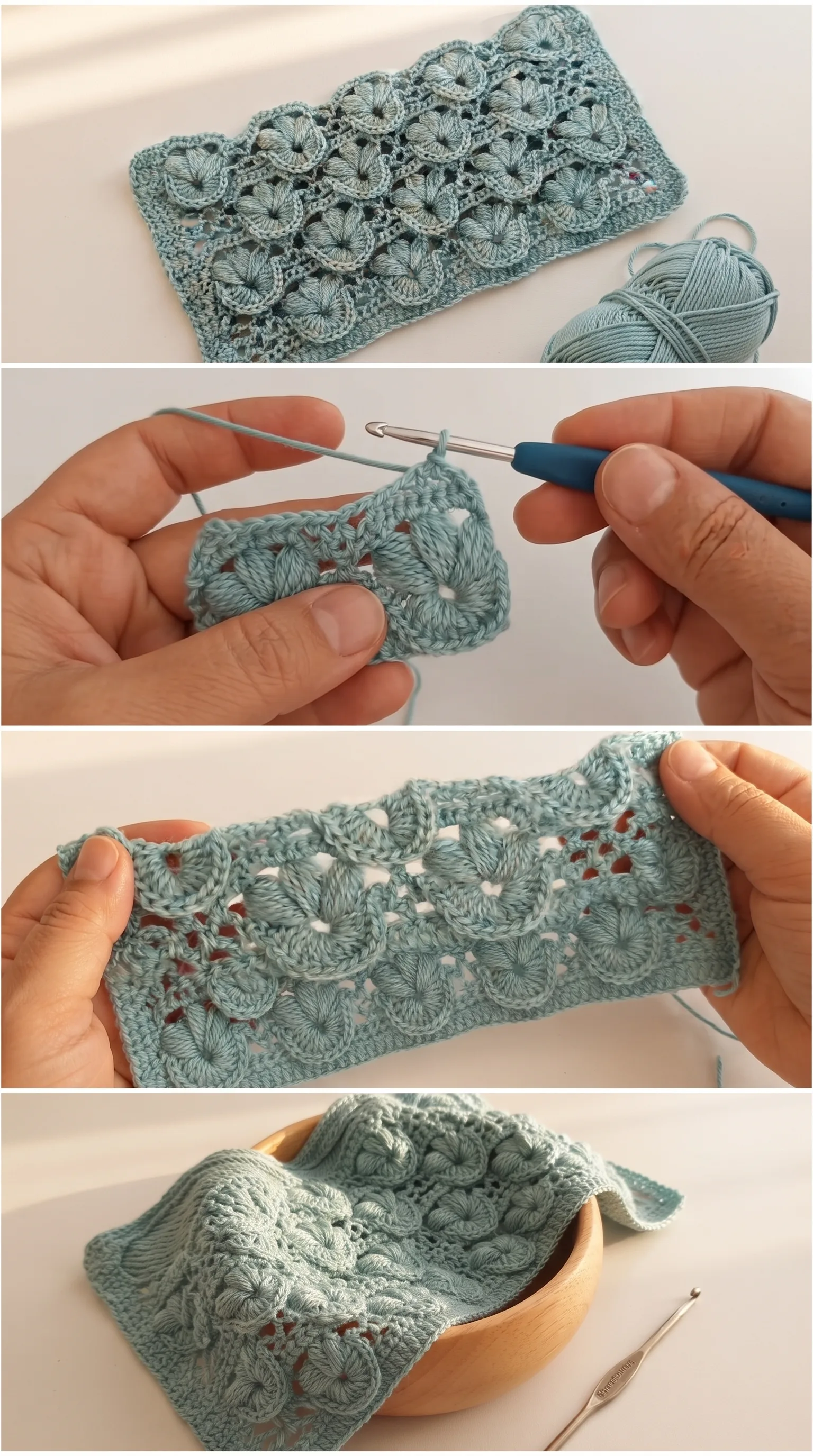
Stitch by Stitch
This pattern draws on a small, purposeful collection of stitches that work together to build those characteristic petal clusters.
BULLET:CH (Chain) The foundation and connector of the lace, used to create the open spaces between clusters that give this fabric its airy quality.
BULLET:SC (Single Crochet) Used at key anchor points to join clusters and keep the pattern structured without adding bulk.
BULLET:DC (Double Crochet) The workhorse of each petal cluster, worked in groups into a single chain space to create the rounded, raised bloom shapes.
BULLET:YO (Yarn Over) A fundamental motion repeated throughout every cluster, controlling the height and fullness of each petal as it forms.
Once your hands find the pattern repeat, the work takes on a meditative rhythm that feels almost musical, each cluster resolving neatly before the next one begins. The full step-by-step tutorial is available in the video linked below, which walks through every round with clear close-up guidance.
Construction
This Crochet Lace Stitch is worked flat in rows, making it one of the more approachable lace structures for crocheters who are newer to decorative stitch patterns. Each row builds directly on the one before it, with the petal clusters nesting into the chain spaces created in the previous row, so the fabric grows in a satisfying and logical way. The foundation chain is a multiple of a set number of stitches, and the video tutorial walks you through establishing that base so the pattern repeats align perfectly from the very first row. If you want a wider panel for a table runner or a narrower strip for a trim or border, simply adjust the number of multiples in your starting chain.
Wearing Your Lace Stitch
Worked into a long rectangular panel, this Crochet Lace Stitch becomes a breathtaking table runner for a Sunday brunch table set with wildflowers and mismatched ceramics. Extend the width and length and you have a lightweight summer shawl to wrap around your shoulders on a cool evening at an outdoor market. Framed as a smaller swatch and stretched in an embroidery hoop, it even becomes wall art that brings texture and handmade warmth to any room.
Keeping Your Lace Panel Looking Its Best
Cotton lace pieces respond beautifully to wet blocking, which means soaking the finished work in cool water, gently pressing out the excess moisture in a clean towel, and pinning it flat to its final dimensions while it dries. This step is not optional when your goal is crisp, defined petal clusters because blocking is what transforms the fabric from something lovely into something truly precise. Hand washing in cool water with a gentle soap is all this piece will ever need, and machine washing, even on a delicate cycle, risks distorting the open chain spaces. Store your finished piece folded loosely in a cotton bag or rolled around a cardboard tube to keep the lace from creasing or flattening over time.
Every piece of lace you complete in your own two hands carries something a shop-bought item never could, the quiet proof of your patience and your eye for beauty. If you make this Crochet Lace Stitch, save this post to your Pinterest boards and share your finished work so other makers can find their way to it too.
Follow us on Pinterest and subscribe to the Newsletter so you don’t miss a thing!
Tutorial and photos of this lace stitch by: Crochet Knitting Sort.