
Today’s guide is all about creating a Crochet Lace Runner, a piece that feels like woven air beneath your fingertips, open and honeyed with light, structured yet impossibly delicate. Pull up a chair, choose your favorite shade of thread, and let yourself begin.

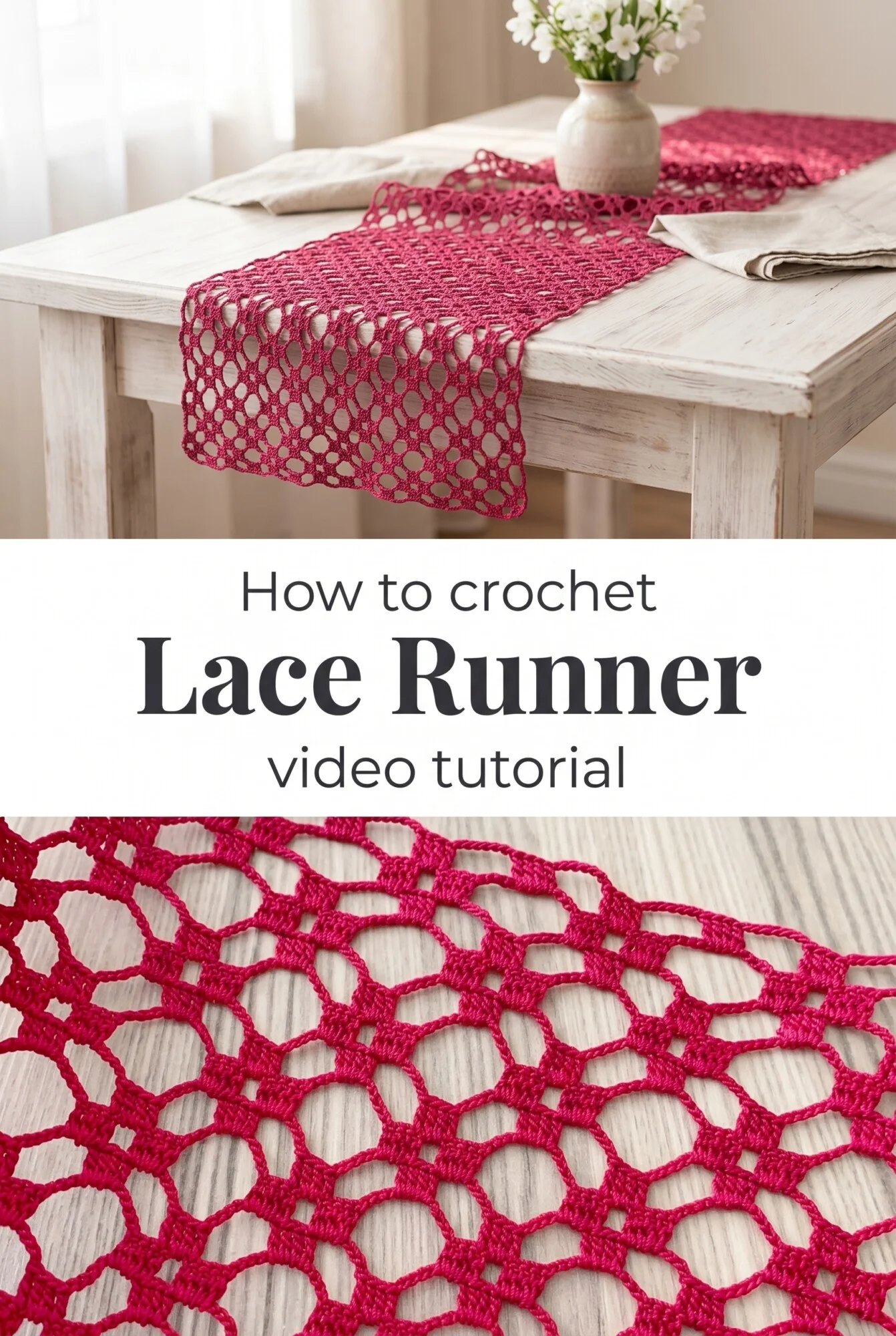
The Lace Runner
A Crochet Lace Runner is the kind of piece that changes a table the way afternoon light changes a room. It brings with it something unhurried and considered, the feeling that someone cared enough to make something beautiful for an ordinary Tuesday. The open mesh pattern creates a lattice of rounded cells, each one framed by small gathered clusters that give the fabric an airy yet structured quality, almost architectural when laid flat. This is a piece for anyone who loves their home to feel handmade, warm, and quietly lovely.
Lace Runner Related Posts:
- Crochet Tissue Box Cover: A Charming Home Accent
- Crochet Paw Coasters: A Playful Pet-Inspired Touch
- Crochet Half-Circle Motif: A Versatile Design Element
- Crochet Hemp Leaf Doily: A Delicate Circular Masterpiece
In the reference images, a deep magenta thread gives the runner an electric, saturated personality, but this pattern carries itself equally well in linen white, dusty sage, or a faded terracotta. A neutral fingering-weight cotton in cream would feel timeless draped across a farmhouse table, while a bold cobalt or forest green would make it feel modern and graphic. The beauty of this Crochet Lace Runner is that the stitch does the work, and the color simply sets the mood.
Materials and Tools
For a runner with the best drape and clarity of stitch definition, reach for a sport-weight or fingering-weight cotton thread, something mercerized if you can find it, as the slight sheen brings out the geometry of the lace beautifully. The piece shown in the video was worked with a fine, smooth thread that allows each cell to open up cleanly, and a 2mm to 2.5mm steel crochet hook is the right tool for that kind of precision. If you prefer a softer, more relaxed drape with a little more body, a DK-weight cotton on a 3.5mm hook will give you a chunkier, equally lovely result. A yarn needle for weaving in ends is the only finishing tool you will need beyond your hook.
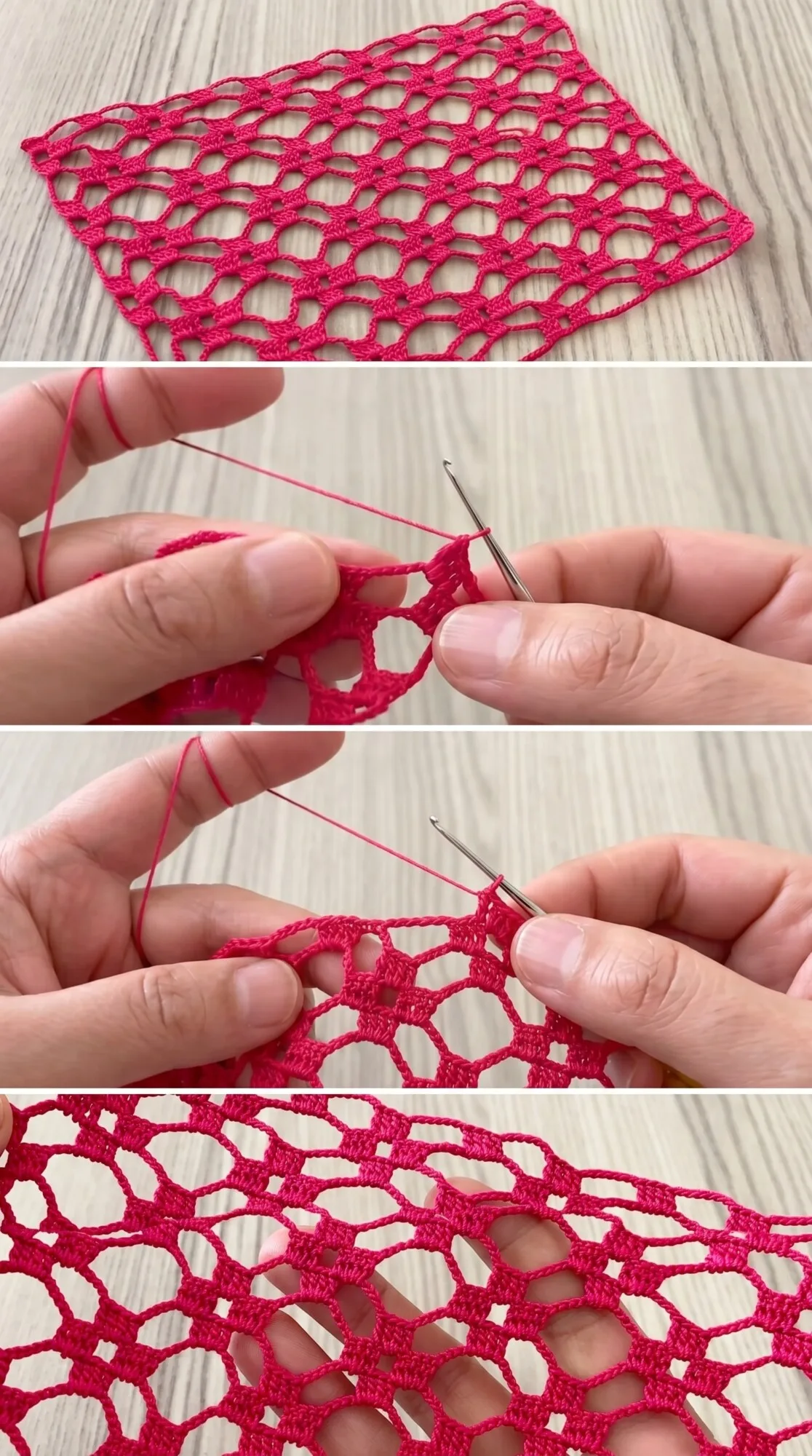
Stitch by Stitch
This Crochet Lace Runner is built from a small, repeating vocabulary of stitches that become deeply intuitive after the first few rows.
BULLET:CH (Chain) The foundation and the connective tissue of every lace row, the chain stitch creates the arching bridges between clusters that give this pattern its open, honeycomb feeling.
BULLET:SC (Single Crochet) Used at the joining points between cells, the SC acts as an anchor, pulling the mesh together with a small, firm knot that keeps the fabric from shifting.
BULLET:DC (Double Crochet) The double crochet builds the clustered nodes that frame each open cell, adding a little height and density that contrasts beautifully against the open chain spaces.
BULLET:CH-SP (Chain Space) Working into the chain space rather than into a stitch is the key technique here, and it is what gives each row its floating, lace-like quality.
Once you settle into the repeat, the rhythm of this stitch becomes genuinely meditative, a reliable back-and-forth that lets your hands move and your mind rest.
Construction
The Crochet Lace Runner is worked flat, back and forth in rows, which makes it approachable for anyone who has moved past the very basics of crochet. You begin with a foundation chain sized to your desired width, and each subsequent row builds the honeycomb mesh upward in a consistent, satisfying repeat. The full pattern and row-by-row guidance are available in the video tutorial linked with this post, and it walks you through every step with close-up clarity. To customize the size, simply adjust your starting chain in multiples of the pattern repeat to make a narrower bookmark-style piece, a full dining table runner, or anything in between.
Wearing Your Lace Runner
Lay your finished Crochet Lace Runner across a console table with a single candle and a sprig of dried eucalyptus, and the whole corner of a room shifts into something considered and intentional. It works equally well as a dresser scarf beneath a jewelry dish or folded loosely over a wooden tray as part of a styled coffee table arrangement. The closer you get to finishing, the more you will find yourself planning exactly where it will live first.
Keeping Your Lace Runner Looking Its Best
After all the care you have put into each row, washing this runner gently will preserve both its shape and its sheen. Hand wash in cool water with a mild soap, pressing the water through the fabric without wringing, and then roll it in a clean towel to remove the excess moisture. Blocking is where this piece truly opens up: pin it out to its finished dimensions on a foam mat while it is still damp and allow it to dry completely flat, and you will see every cell stretch into its proper rounded shape. Store it folded loosely in a breathable cotton bag away from direct sunlight to keep the color rich and the fibers relaxed.
Every Crochet Lace Runner you finish is a small, generous act of making something the world did not have before, and that is worth every chain stitch. If you make yours, please share a photo on Pinterest and tag it so this community of makers can see the colors and spaces you brought it into.
Follow us on Pinterest and subscribe to the Newsletter so you don’t miss a thing!
Tutorial and photos of this lace runner by: Crochet Knitting Therapy .