
A free video tutorial from cc.crochet breaks down every round of the Crochet Bae Mandala Rug with visual clarity that transforms this intricate circle into a confident weekend project. The layered motifs and airy spokes create dimension that shifts with the light, making this rug a true showpiece for any room!

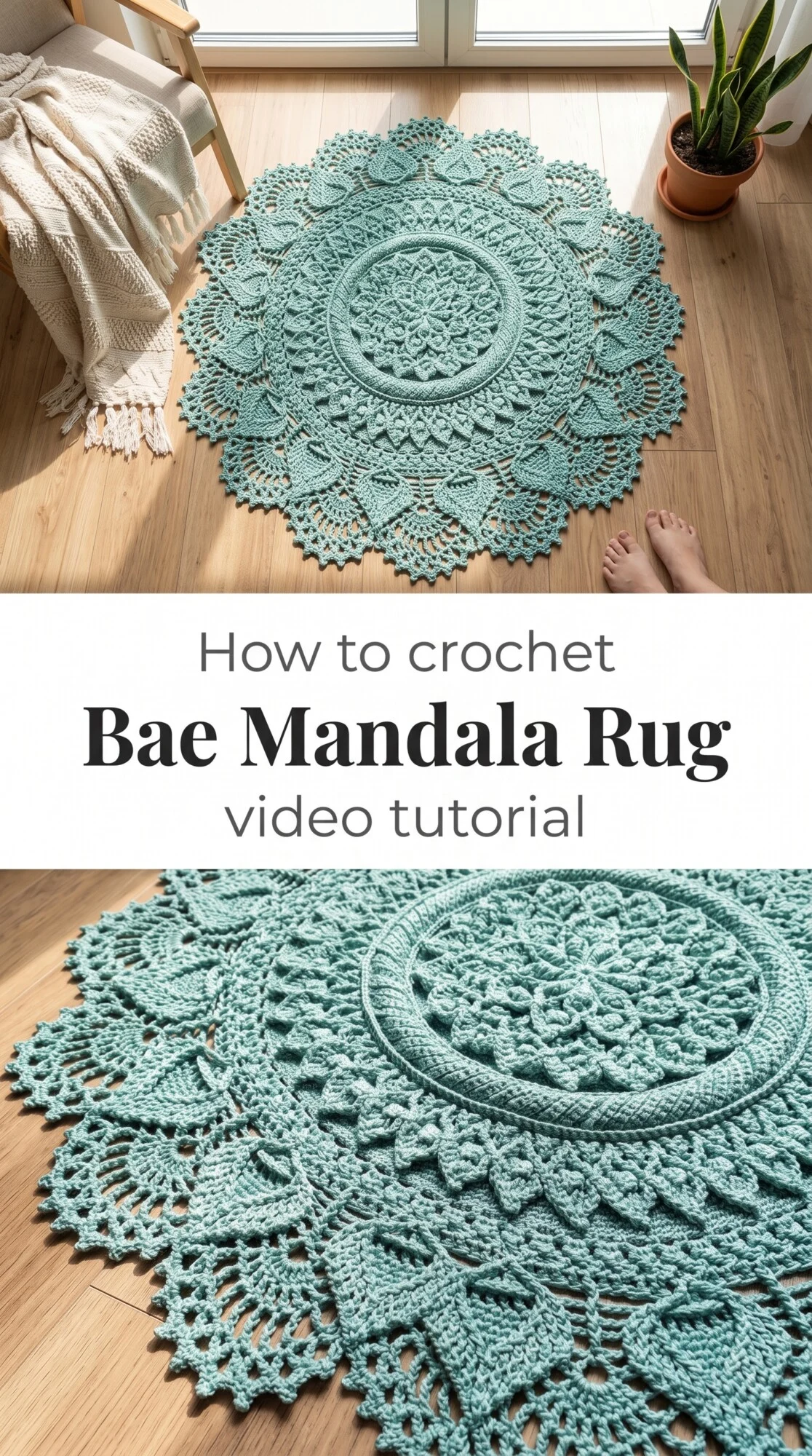
The Bae Mandala Rug
The Crochet Bae Mandala Rug blooms outward in concentric circles of texture, each round building on the last with lacy openwork and raised clusters that catch shadow and light. This is a rug for the crafter who wants impact without fuss, a piece that commands attention in an entryway, beneath a coffee table, or layered over a neutral carpet. The geometric petals radiating from the center give it that mandala magic, grounding a space with symmetry and intention. Whether you work it in a single serene shade or graduate through a tonal palette, this rug becomes an anchor for your room.
Mandala Rug Related Posts:
- Crochet Tuxedo Cat Coaster: A Charming Kitchen Accent
- Crochet Table Runner: An Elegant Home Accent
- Crochet Solomon’s Knot Stitch: A Delicate Lacy Essential
- Crochet Leaf Dishcloth: A Fresh and Eco-Friendly Essential
Soft aqua and seafoam lend a coastal calm, while charcoal or taupe bring sophisticated restraint. You could also lean into jewel tones like deep plum or emerald for a more bohemian feel, or keep it classic in cream and natural linen shades that work with everything. The beauty of the Crochet Bae Mandala Rug lies in how adaptable it is to your aesthetic, shifting mood and style with just a color swap.
Materials and Tools
You will need a worsted weight cotton or cotton blend yarn for structure and drape, something with a tight twist that holds stitch definition without going stiff. A 4mm or 4.5mm crochet hook works beautifully to keep the fabric dense enough for floor use while still showing off the lace. Cotton is ideal here because it lies flat, resists pilling, and can be washed without fear. Keep a pair of scissors and a yarn needle nearby for weaving in ends as you go, especially as you transition between rounds.
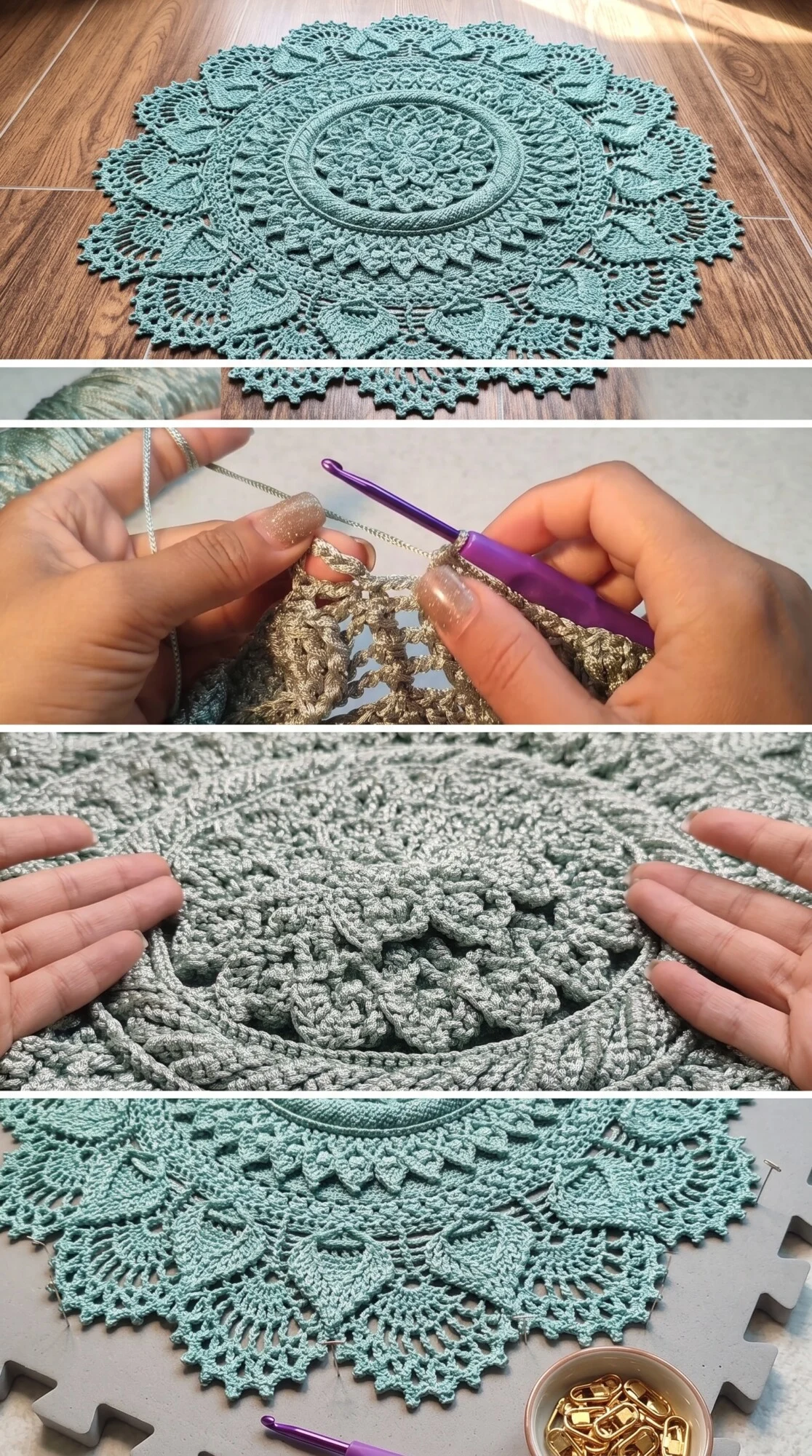
Stitch by Stitch
The pattern uses a handful of foundational stitches layered with intention.
BULLET:CH (chain) The starting loop and connective tissue between motifs, chains create the open spaces that define the mandala’s lace.
BULLET:SC (single crochet) Low and tight, single crochet anchors the rounds and gives structure where the design needs to pause.
BULLET:DC (double crochet) Taller and faster to work, double crochet builds height and creates the flowing petals around each ring.
BULLET:Slip Stitch Used to join rounds invisibly and travel across the work without adding bulk or height.
There is a meditative rhythm to working in the round, each stitch bringing you closer to the outer edge, the piece growing heavy and real in your lap as the mandala takes shape.
Construction
The Crochet Bae Mandala Rug is worked in continuous rounds from the center outward, beginning with a magic ring and expanding through increases and lace motifs that keep the circle perfectly flat. Each round builds on the previous with a combination of solid stitches and chain spaces, creating that signature spoke-and-petal effect. Beginners will appreciate how forgiving the structure is, any minor tension shifts blend into the overall texture. You can easily adjust the size by adding or omitting outer rounds, making this pattern as flexible as your space requires.
Styling Your Bae Mandala Rug
Lay the Crochet Bae Mandala Rug in front of a reading chair with a stack of books and a ceramic mug for that lived-in, cozy corner vibe. It also shines in a bedroom at the foot of the bed or beside a nightstand, softening hard floors and adding handmade warmth. Use it as a layering piece over a larger jute rug for texture contrast that feels collected and intentional.
Caring for Your Mandala Rug
Block your finished rug by dampening it lightly and pinning the outer points to shape, letting it dry flat to set the lacework and even out any tension. Spot clean as needed with a damp cloth and mild soap, or hand wash in cool water and lay flat to dry, never wringing or hanging. Store it rolled rather than folded to prevent creasing, and shake it out gently every few weeks to keep the fibers lively. Cotton rugs soften beautifully with age and wear, becoming even more supple over time.
You have everything you need to make something that roots a room in beauty and intention, one careful round at a time. The handmade home starts here, with your hands and your hook. Pin this tutorial and tag your progress so we can all celebrate the magic you create.
Follow us on Pinterest and subscribe to the Newsletter so you don’t miss a thing!
Tutorial and photos of this bae mandala rug by: cc crochet.