
A rectangular crochet shell table runner built in alternating bands of teal and white creates a layered, lace-like structure where solid texture meets open lacework in perfect visual conversation. From a simple centerpiece to a dresser scarf or sideboard accent, this one pattern quietly transforms every surface it rests upon.

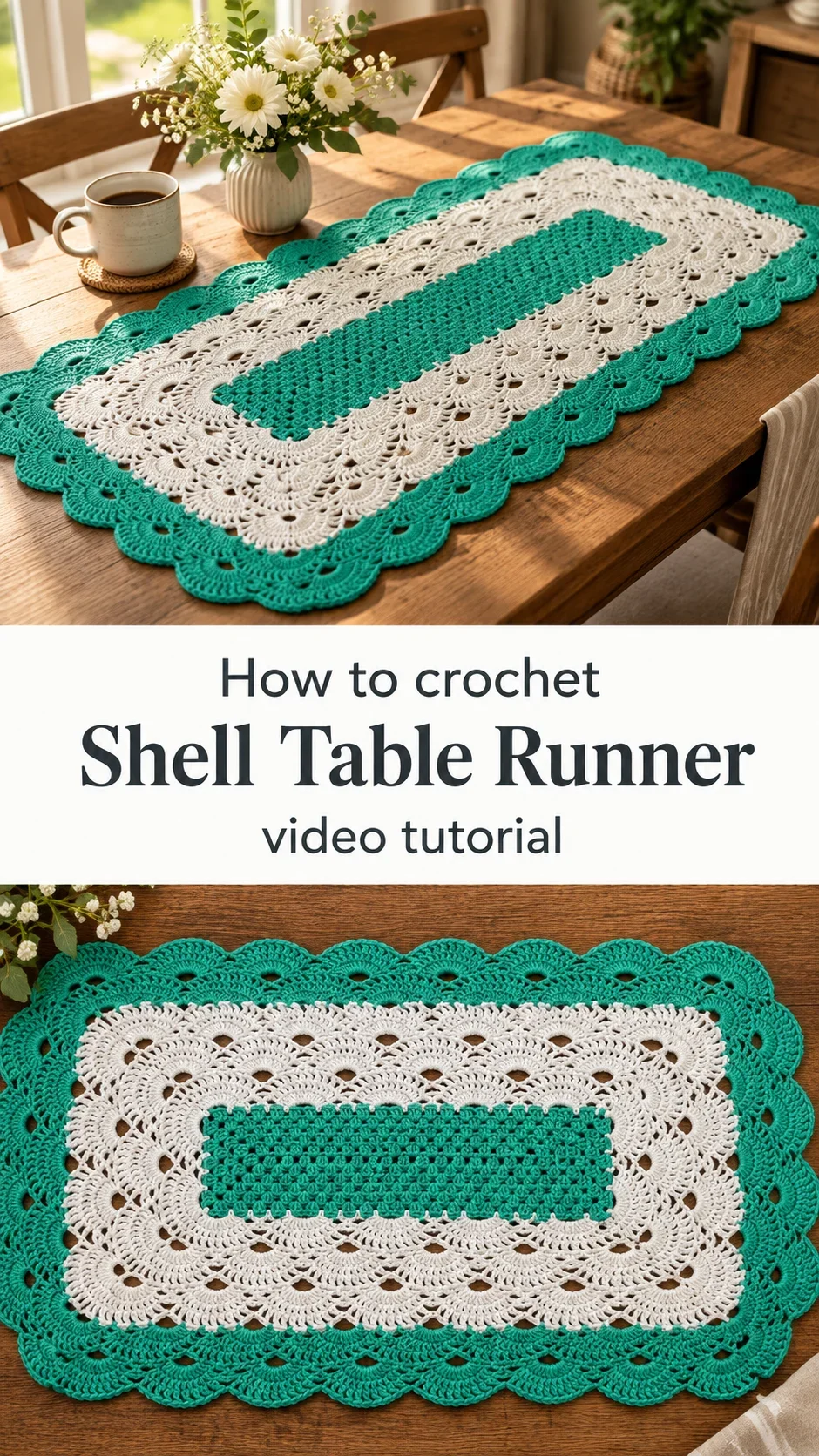
The Shell Table Runner
This Crochet Shell Table Runner carries the kind of quiet beauty that makes people stop mid-conversation to reach out and touch it. The surface moves between solid teal panels and creamy white lacework in a way that feels airy yet structured, like something preserved from a grandmother’s cedar chest but completely at home on a modern farmhouse table. The scalloped teal border frames the entire piece with a gentle flourish, giving it a finished, heirloom quality that looks far more intricate than the stitches actually are. Whether you are an intermediate maker or a confident beginner, this runner rewards every hour of your time with something genuinely beautiful.
Table Runner Related Posts:
- Crochet Rose Flower: A Beautiful Decorative Accent
- Crochet Snowflake Doily: A Delicate Timeless Accent
- Crochet 3D Table Runner: An Elegant Dining Centerpiece
- Crochet Thaposh Doily: A Delicate Handcrafted Treasure
The two-tone teal and white palette shown in the tutorial is timeless, but this pattern is wonderfully open to interpretation. Imagine it worked in dusty sage and warm linen for an earthy autumn table, or in deep navy and cream for a coastal dining room. The color blocking is simple enough that even a single-color version in a rich jewel tone would feel sophisticated and intentional.
Materials and Tools
For a runner with the drape and stitch definition visible in the tutorial, reach for a DK weight or sport weight cotton yarn. Cotton gives the shells their crisp, clean edges and holds the open lacework sections beautifully without the floppy quality that acrylic can sometimes bring to fine work. A 3.5mm crochet hook is ideal for sport weight cotton, while a 4mm hook suits DK weight and gives a slightly more relaxed, flowing result. You will also want a yarn needle for weaving in your color-change ends cleanly, and a blocking mat will become your best friend when it comes time to finish the piece.
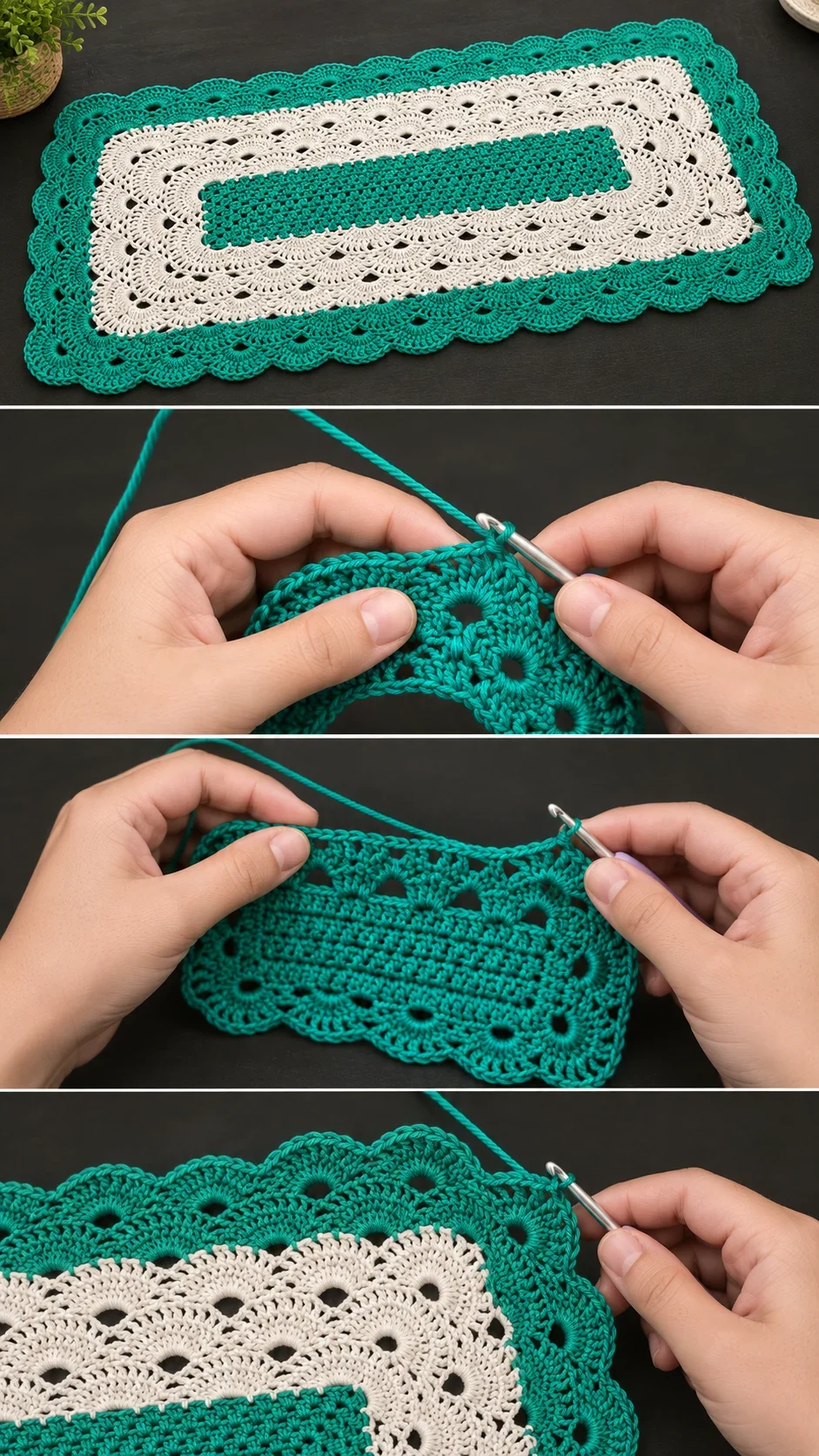
Stitch by Stitch
This Crochet Shell Table Runner draws on a small, satisfying collection of stitches that build on one another naturally.
BULLET:SC (Single Crochet) The foundation of the solid teal center panel, SC stitches create a dense, even texture that anchors the lacy sections around it.
BULLET:DC (Double Crochet) The workhorse of the shell stitch groups, DC stitches fan out in clusters of five to form the signature scalloped shells across the white sections.
BULLET:CH (Chain) Short chain spaces separate the shell clusters and create the open, diamond-like eyelets that give the lacework its characteristic breathability.
BULLET:SL ST (Slip Stitch) Used at round joins and within the scalloped border to position the hook cleanly without adding visible height to the edge.
Once your hands settle into the pattern of shell, chain, shell, the work takes on a meditative rhythm that makes an evening of crocheting feel genuinely restful rather than effortful.
Construction
The Crochet Shell Table Runner begins with a foundation chain worked to your desired length, after which the teal center panel is built up in rows of SC to create a solid rectangular base. From there, rounds of white lacework are added outward, each round expanding the shell pattern and building the characteristic concentric rectangle effect visible in the finished piece. The full video tutorial available from The Art Zone walks through every round in clear detail, making it accessible even if you have never worked a shell border before. To customise the size, simply adjust the length of your starting chain in multiples that suit the shell repeat count.
Wearing Your Shell Table Runner
Lay this runner along a dining table as a centerpiece anchor beneath a vase of dried flowers or a cluster of pillar candles, and the lace sections catch and scatter the light in a way that genuinely changes the atmosphere of the room. Drape it across a console table in an entryway, or use it as a dresser scarf beneath a mirror, and it brings the same warmth and handmade character to smaller spaces. Finishing this piece means finishing something you will genuinely use every single day.
Keeping Your Shell Table Runner Looking Its Best
Cotton crochet runners wash beautifully, and this piece can be hand washed in cool water with a gentle soap or placed in a mesh laundry bag on a delicate machine cycle. The most important step after washing is wet blocking: pin the runner out to its full dimensions on a foam blocking mat, gently stretching the shell sections open so the lacework dries in crisp, defined shape. Blocking makes a visible difference to the openwork sections and sharpens the scalloped border into its proper curved form. Store the runner flat or loosely rolled, never folded at the shell sections, to keep the fibers from creasing along the lace.
Every Crochet Shell Table Runner you make carries the quiet confidence of someone who chose to create something lasting with their own hands. Pin this article to your Home Decor board and share your finished runner on Instagram with the tag so the whole community can celebrate it with you.
Follow us on Pinterest and subscribe to the Newsletter so you don’t miss a thing!
Tutorial and photos of this shell table runner by: The Art Zone.