
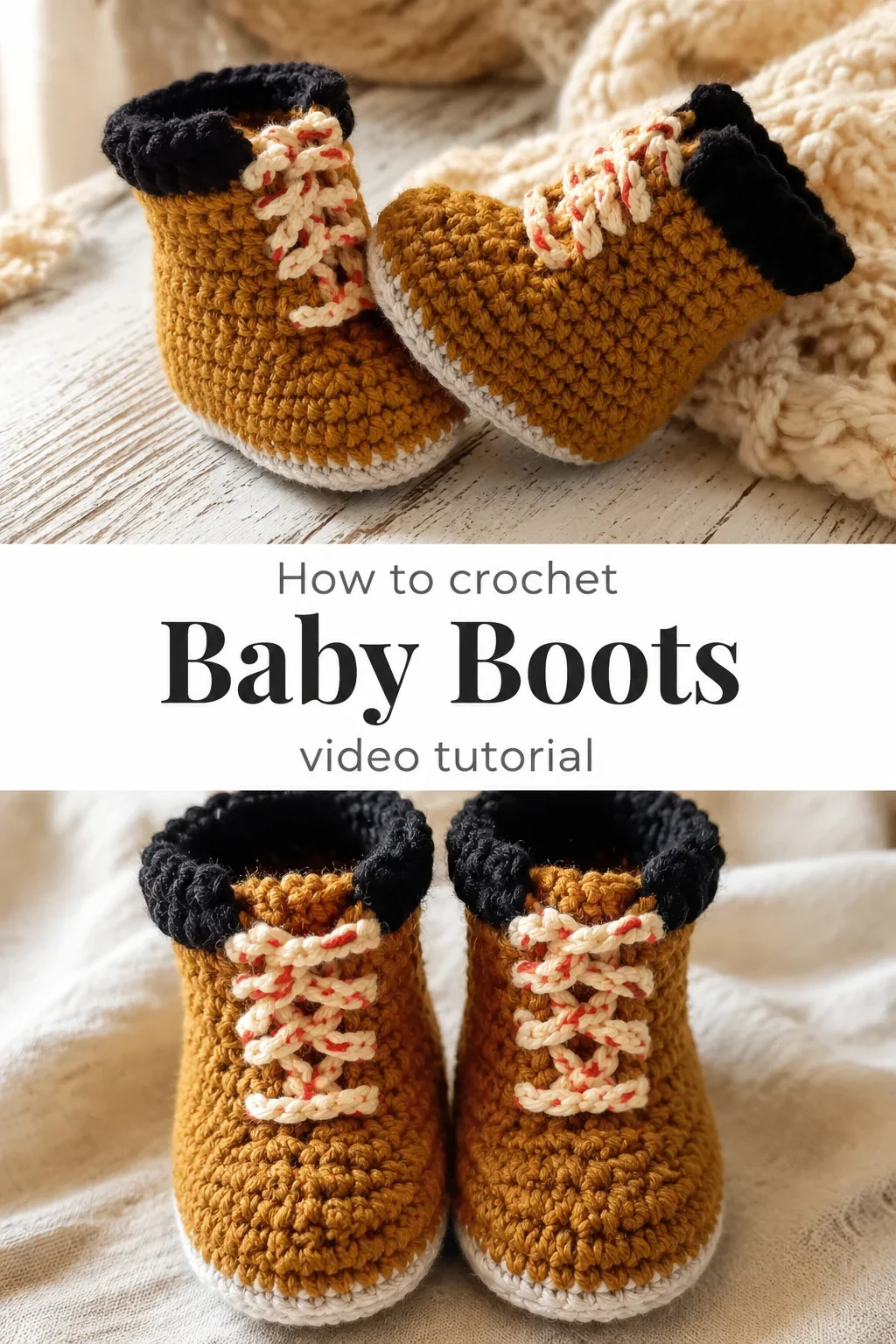
A free video tutorial is available to guide you through every step of making these adorable Crochet Baby Boots, so you never have to guess your way through a single stitch. The way the mustard-gold yarn builds into that structured little ankle boot shape, complete with a contrast sole and laced front, is genuinely one of the most satisfying small projects I have ever seen!

The Baby Boots
These Crochet Baby Boots carry the quiet magic of something made with intention, the kind of tiny handmade object that feels precious before it is even finished. Modelled after a classic lace-up work boot in miniature, they feature a warm golden-tan upper, a cream and grey contrast sole, a dark cuff at the ankle, and a red-flecked cream lace threaded through the front. They are made for newborns and infants, and they photograph so beautifully that they are just as popular as gift wrapping props and keepsakes as they are actual wearable booties. Every SC stitch in the upper body gives the boot that airy yet structured texture that holds its shape without being stiff against soft baby skin.
Baby Boots Related Posts:
- Crochet Jasmine Stitch Slippers: A Cozy Homewear Essential
- Crochet Ankle Socks: A Soft and Charming Everyday Wear
- Crochet Japanese Zori Slippers: A Refined Cultural Classic
- Crochet House Slippers: A Cozy Everyday Essential
The classic colour combination shown here, warm mustard with a cream sole and dark charcoal cuff, is essentially timeless and works for any season and any baby. You could just as easily swap the palette to a soft sage with a white sole and caramel cuff for a spring baby, or go deep burgundy with a natural cream base for a winter arrival. These boots pair beautifully with knit rompers, denim dungarees, or simple white onesies, and the lace detail gives them a personality that plain booties simply cannot match.
Materials and Tools
To make these Crochet Baby Boots, you will want to reach for a worsted weight yarn in your main boot colour, which gives the upper body that satisfying density and helps the boot keep its shape without requiring any stiffening. The sole and cuff work best in worsted weight as well, so you can keep your hook consistent throughout at a 4mm hook, which is the sweet spot for getting a firm, even fabric that is not too tight to work into comfortably. For fibre, a cotton-acrylic blend or a soft superwash merino are both excellent choices since they are gentle against newborn skin and hold up to the gentle washing that baby items inevitably need. A yarn needle for finishing and weaving ends, along with a length of twisted cord or thin decorative rope for the laces, are the only additional tools you need to complete the look.
Stitch by Stitch
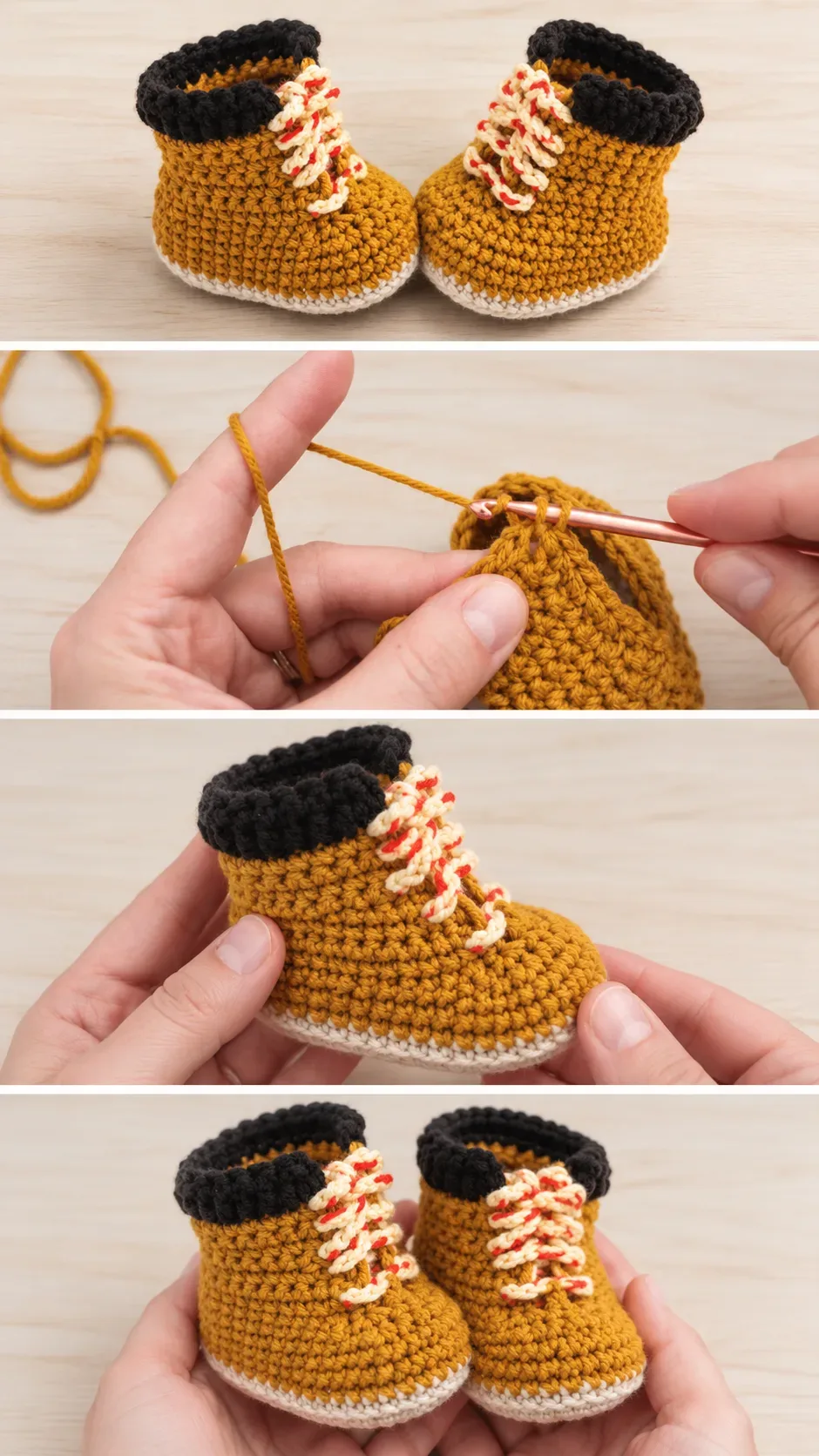
These boots rely on a small, dependable family of stitches that beginners will find approachable and intermediate crocheters will move through with satisfying speed.
BULLET:SC (single crochet) The primary stitch used throughout the boot upper, creating a tight, even fabric that gives the boot its structured silhouette.
BULLET:DC (double crochet) Used in select sections to build height more quickly, particularly useful when forming the cuff and upper ankle area.
BULLET:SL ST (slip stitch) Works as a joining stitch when crocheting in the round and helps create clean, invisible seams between sections.
BULLET:CH (chain) Forms the foundation chain at the start and also creates the simple eyelets used to thread the decorative laces through the front of the boot.
There is a genuinely meditative rhythm to working the SC rows around the boot body, the repetition is steady and grounding, and you begin to feel the shape emerge under your hands long before the piece is finished.
Construction
These Crochet Baby Boots are worked in the round from the sole upward, which means you begin with a foundation chain that forms the oval base, then build the sides of the boot vertically before shaping the toe and constructing the ankle cuff separately. The sole is crocheted in a contrast colour and serves as both the structural base and the visual accent that gives the boot its sneaker-like profile. The upper body is then worked in rounds of SC, and the cuff is added last as a fold-over collar in a contrast colour, which is what gives these boots their distinctive work-boot character. If you want to make them slightly roomier for a three to six month baby, simply go up to a 4.5mm hook and your worsted yarn will do the rest without any changes to the pattern itself.
Wearing Your Baby Boots
These Crochet Baby Boots look completely charming paired with a cable-knit onesie and a simple beanie for autumn newborn portraits. They also work beautifully as a finishing touch on a baby shower gift basket, nestled alongside a handmade blanket and a soft toy. Once finished, you will want to put them on every baby you can find, and that is a completely reasonable response.
Keeping Your Baby Boots Looking Their Best
Because these boots are made for babies, gentle care is non-negotiable, and the good news is that worsted weight cotton-acrylic blends and superwash merinos are both easy to launder without drama. Turn the boots inside out and hand wash them in cool water with a mild detergent, then reshape them gently and lay them flat on a clean towel to dry, which keeps the sole flat and the cuff from stretching out of shape. If you have used a natural fibre like merino, a light blocking session after washing will help the boots hold their shape and look freshly made every time. Store them flat or loosely stuffed with a small piece of tissue to help them keep their three-dimensional form between uses.
Every pair of Crochet Baby Boots you finish is a small, real act of care that no shop-bought alternative can replicate, and that matters more than any stitch count ever could. Save this post to your Pinterest boards and share your finished boots so the whole handmade community can admire what your hands made.
Follow us on Pinterest and subscribe to the Newsletter so you don’t miss a thing!
Tutorial and photos of this baby boots by: Stephanie Zed.