
Today’s guide walks you through the making of a Crochet Yoke Dress, a piece that feels like cool linen against summer skin and looks like something passed down through generations of careful hands. Pull up your hook and let this one grow beneath your fingers.

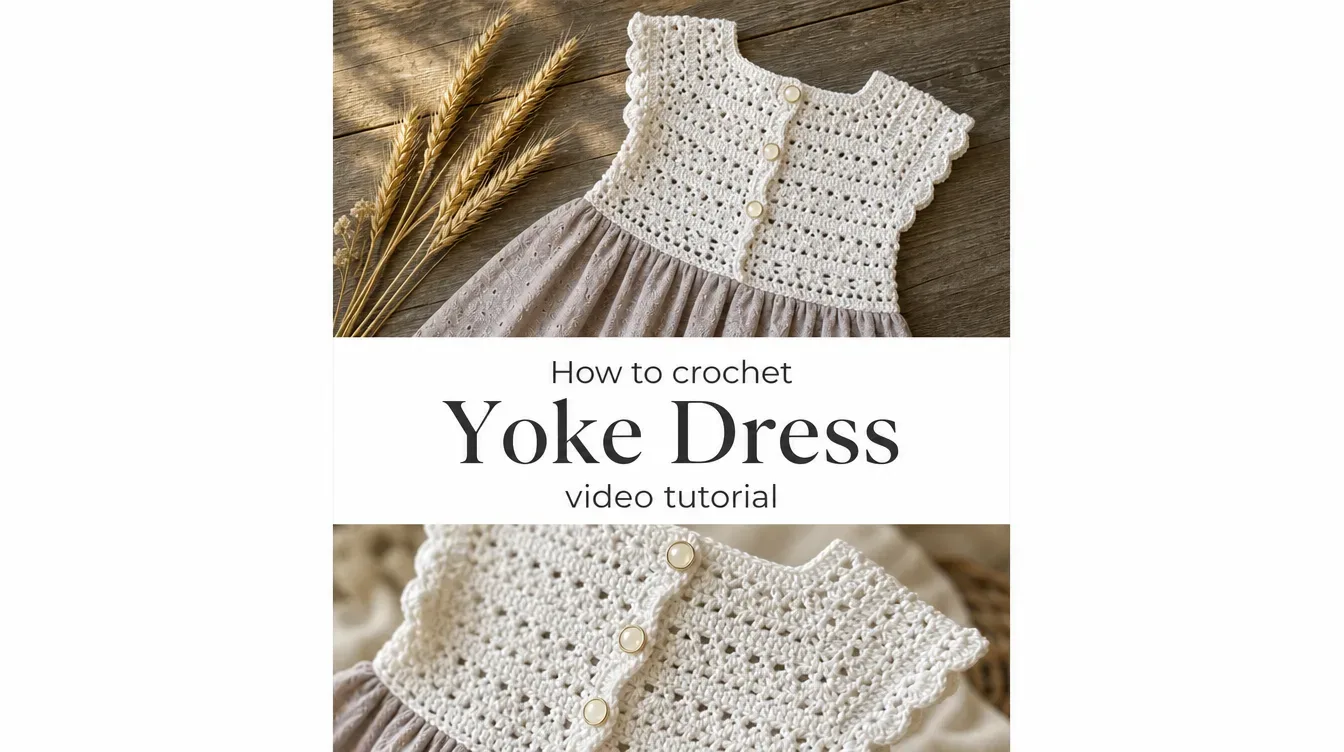
The Yoke Dress
The Crochet Yoke Dress is one of those pieces that carries a certain softness the moment you look at it. The structured lace yoke sits across the chest and shoulders like a second skin, airy yet structured, while the gathered fabric skirt below brings movement and a quiet romanticism to the whole silhouette. It is made for the little ones in your life, those toddler years full of garden mornings and sun-warmed afternoons, though the design scales beautifully for older children too. Whether you are a maker who loves heirloom aesthetics or someone new to garment construction, this dress asks only for your patience and your care.
Yoke Dress Related Posts:
- Crochet Festival Bralette: A Vibrant Summer Essential
- Crochet High Neck Vest: A Timeless Wardrobe Essential
- Crochet Vest and Top: A Versatile Rectangle Design
- Crochet Budapest Halter Top: A Chic Summer Essential
White is the obvious choice here, and the reference images show exactly why: that crisp, clean ivory against the blush-toned fabric skirt creates a whisper of elegance that feels both vintage and fresh. But soft sage, dusty rose, or even a warm cream against a printed cotton skirt would be equally beautiful. The fabric portion gives you real creative freedom, letting you match the dress to a season, a celebration, or simply a favorite color.
Materials and Tools
For the crocheted yoke, reach for a DK weight cotton yarn, something with a slight sheen and a smooth ply that will let the lace pattern read clearly without muddying the openwork. A 3.5mm crochet hook is the sweet spot for this weight, giving you enough tension to hold the structure of the yoke while keeping the fabric light and breathable. Cotton is strongly recommended over acrylic here because it blocks beautifully and drapes with that lived-in softness that makes handmade garments feel intentional rather than stiff. You will also want a yarn needle for weaving in ends, a stitch marker or two to track your rounds, and enough fabric for the gathered skirt portion, approximately half a meter of lightweight cotton or eyelet fabric depending on the size you are making.
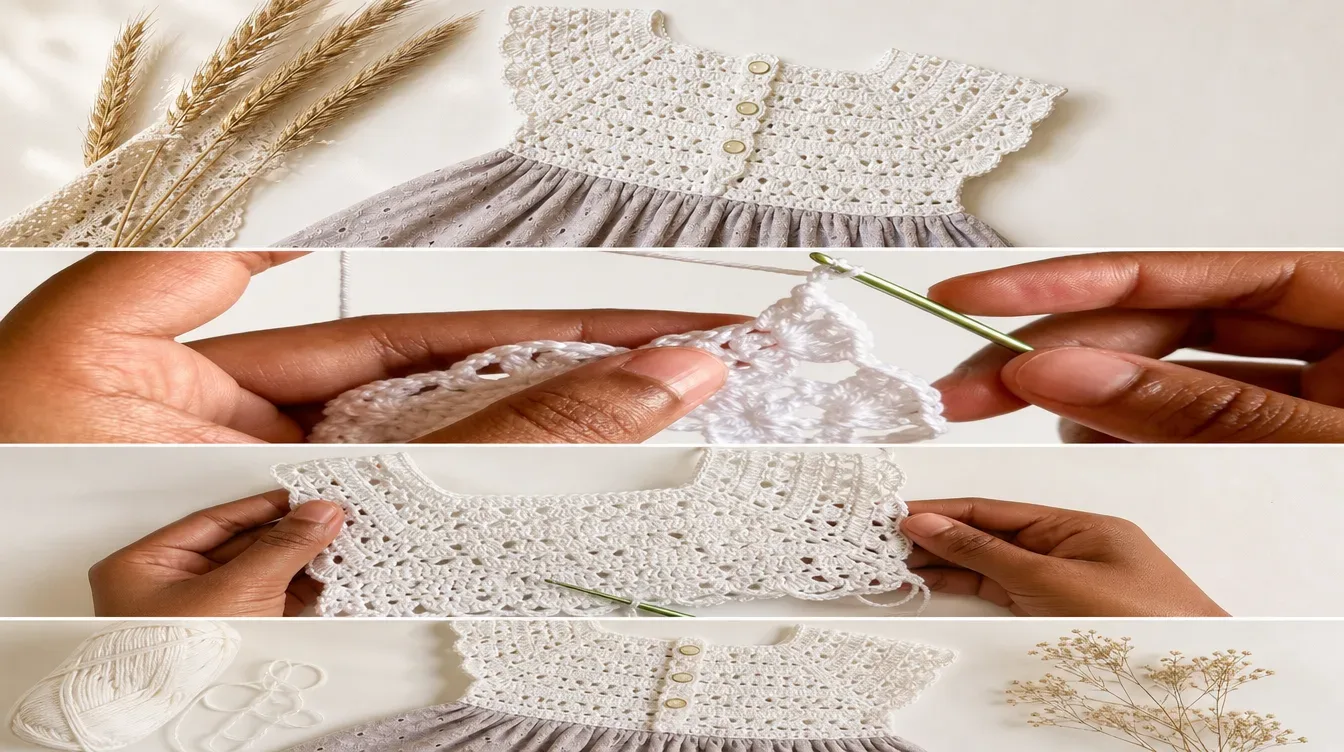
Stitch by Stitch
The Crochet Yoke Dress calls on a small and manageable collection of stitches that build into something genuinely beautiful.
BULLET:CH (chain) The foundation of every row and the spacing element within the lace pattern that creates those signature open arches across the yoke.
BULLET:SC (single crochet) Used at the neckline and armhole edges to create a clean, tidy border that frames the lace without competing with it.
BULLET:DC (double crochet) The workhorse of the yoke body, worked in clusters and fans to produce the shell-like texture visible across the bodice.
BULLET:YO (yarn over) The essential motion that builds each DC and controls the height and drape of every stitch in the pattern.
Once you find the rhythm of the shell clusters, the work becomes meditative in the best way, that quiet repetition where your hands begin to know the stitch before your eyes do.
Construction
The yoke is worked from the top down, beginning at the neckline with a foundation chain and expanding outward in increases that shape the shoulders and chest simultaneously. This top-down construction means you can try the piece on a dress form or against a child’s measurements as you go, adjusting length before you commit to the final rows. The fabric skirt is gathered and sewn directly onto the finished crochet yoke along the lower edge, a technique that even confident beginners can manage with basic hand sewing or a simple machine stitch. If you want to customize the sizing, the video tutorial linked below walks through the increase logic in a way that makes adapting to different ages genuinely approachable.
Wearing Your Yoke Dress
Pair the finished Crochet Yoke Dress with soft leather sandals and a sun hat for a garden party or a slow weekend morning at the market. It also layers beautifully over a fitted long-sleeve bodysuit in cooler months, letting the lace yoke remain the focal point through autumn. Every time this dress is worn, it will look like something that took more than skill to make, something that took real love.
Washing and Caring for Your Crochet Yoke Dress
Cotton yarn responds wonderfully to wet blocking, so once your yoke is complete and before you attach the skirt, pin it out gently on a foam mat, mist it with cool water, and allow it to dry flat to set the lace pattern at its fullest. For washing the finished dress, hand wash in cool water with a gentle detergent and press out the excess water without wringing to protect both the crochet and the fabric skirt. Lay the dress flat to dry, reshaping the yoke with your hands while it is still damp. Store it folded rather than hung to prevent the fabric skirt from stretching at the waist seam over time.
Every Crochet Yoke Dress you make carries the quiet mark of your hands, your tension, your time, and that is something no machine will ever replicate. Save this article to your Pinterest boards and share your finished dress with the tag so this community of makers can celebrate it with you.
Follow us on Pinterest and subscribe to the Newsletter so you don’t miss a thing!
Tutorial and photos of this yoke dress by: Beyond Diary.