
Crochet House Slippers are comfort made tangible, a soft architecture for the quietest hours of your day. They carry the feeling of cold mornings turned warm, of wool against stone floors and the particular peace of being home.

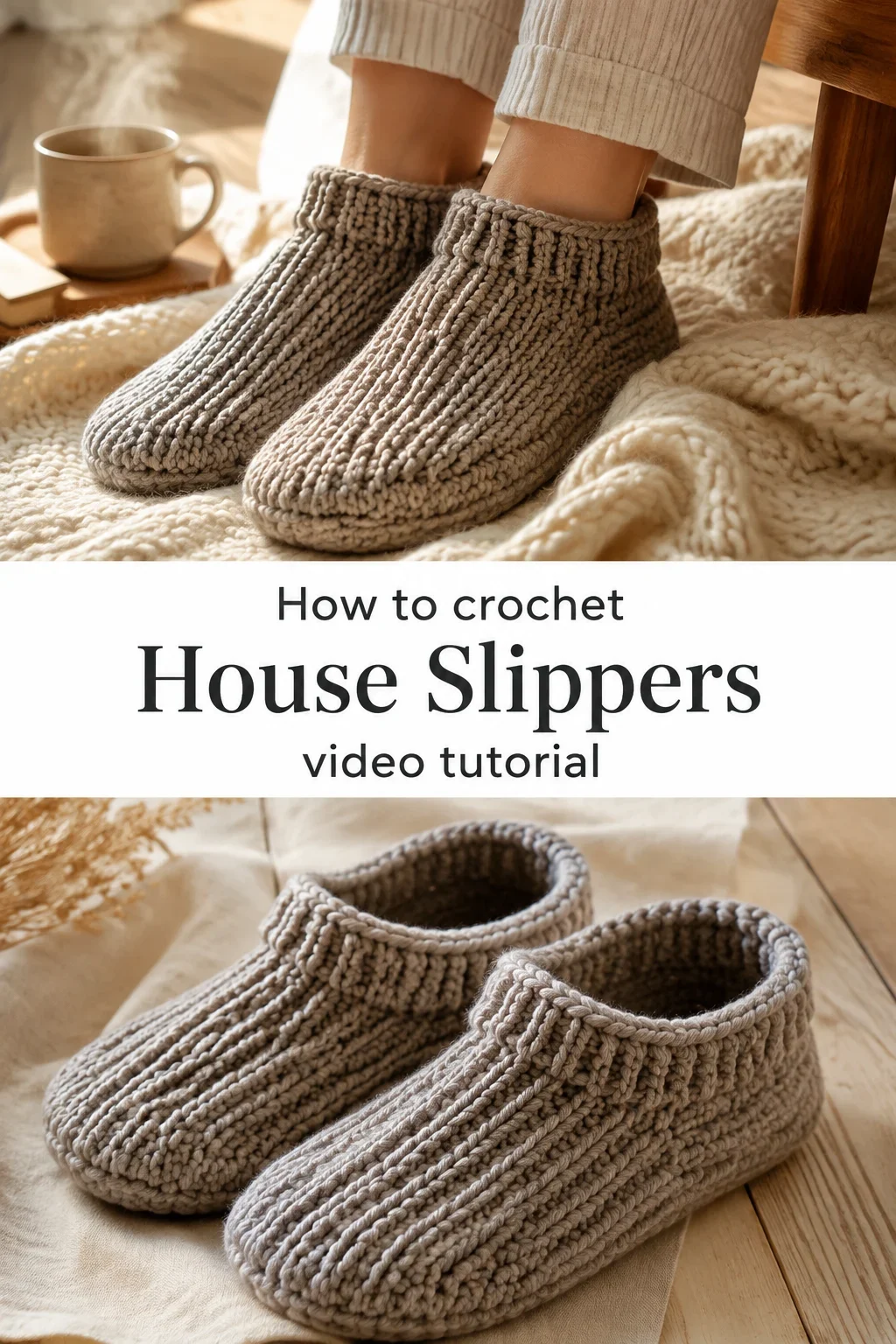
The House Slippers
These Crochet House Slippers are the kind of project that wraps itself around your daily life in the most literal way possible. Structured enough to hold their shape through weeks of wear, yet soft enough to feel like a second skin, they have a satisfying solidity that store-bought slippers rarely achieve. They are made for the person who pads through the kitchen at dawn, who reads by lamplight, who believes that handmade things deserve to live close to the body. Every stitch is visible and intentional, creating a ribbed texture that feels as good under the hand as it does beneath the foot.
House Slippers Related Posts:
- Crochet House Slippers: A Quick and Simple Classic
- Crochet Jasmine Stitch Slippers: A Cozy Homewear Essential
- Crochet Comfort Slippers: A Warm and Cozy Essential
- Crochet Japanese Zori Slippers: A Refined Cultural Classic
The color options shown in the tutorial reference images are beautifully considered, ranging from a warm terracotta and rich chocolate brown to soft yellow, slate gray, cobalt blue, deep magenta, and a festive red with a white cuff trim. There is even a cream version finished with a furry yarn edging that gives it an almost sheepskin quality. Whether you reach for a neutral that disappears into your home or a bold pop of color that makes you smile each morning, these slippers work across the whole spectrum. A two-tone version, like the red body with a white rolled cuff, adds a personalized and giftable quality that makes these feel genuinely considered.
Materials and Tools
For Crochet House Slippers that will actually hold up to daily wear, a bulky weight yarn is your most reliable choice, giving you that thick, cushioned sole without needing to double up strands. Look for a wool blend or an acrylic-wool mix in this weight category, as pure wool offers warmth and natural elasticity while acrylic adds durability and ease of washing. A 6mm or 6.5mm crochet hook works beautifully with bulky yarn and gives you a firm, airy yet structured fabric that will not stretch out of shape underfoot. Keep a stitch marker nearby to track your rounds, especially when you begin shaping the toe, and a blunt tapestry needle will make weaving in your ends a quiet and satisfying final ritual.
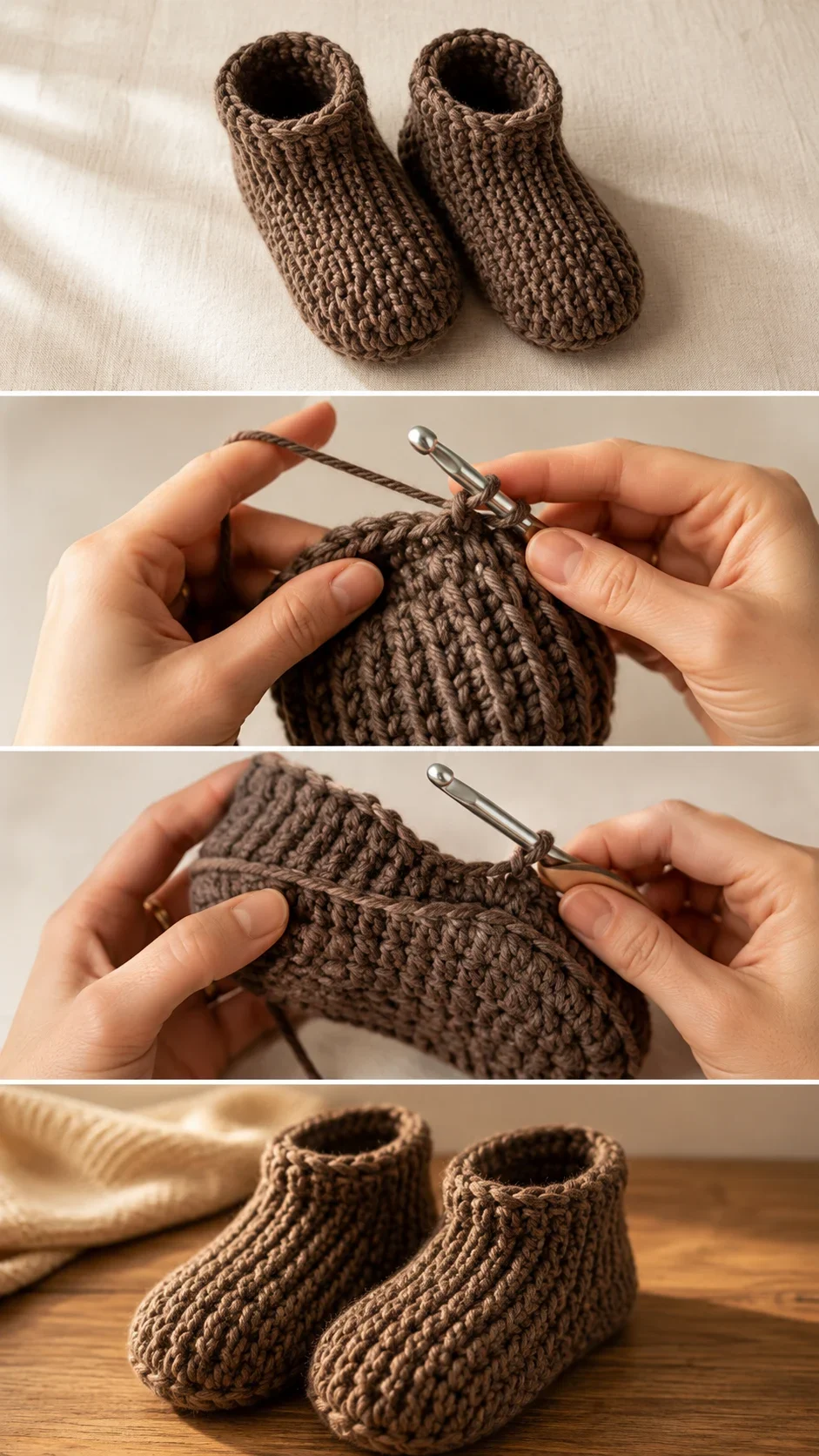
Stitch by Stitch
These slippers draw on a compact and approachable stitch vocabulary that makes them accessible from the very first pair.
BULLET:SC (Single Crochet) The foundational stitch used throughout the sole and body, creating a dense and stable fabric that holds its form under pressure.
BULLET:DC (Double Crochet) Used in some versions for the cuff, adding height and a slightly more open texture that rolls and drapes gently at the ankle.
BULLET:BLO (Back Loop Only) Working through the back loop only creates that distinctive ribbed appearance along the body of the slipper, giving it visual depth and stretch.
BULLET:SL ST (Slip Stitch) Used to join rounds seamlessly and to finish edges neatly, keeping the construction clean and invisible.
There is a meditative rhythm to working slipper rounds in BLO that many crafters find genuinely restorative, the repetition settling into something almost musical as the fabric grows in your hands.
Construction
The full step-by-step construction is walked through clearly in the video tutorial, which guides you from the very first chain through to the finished slipper ready to wear. The construction begins at the sole, worked flat and then built upward in continuous rounds that shape the toe box and rise toward the ankle opening. Because the slipper is worked in one piece with minimal seaming, it is beginner-friendly in a genuinely practical way, with no complicated assembly required at the end. If you want to customize the fit, you can easily adjust the number of foundation chains to lengthen or shorten the sole before you begin working upward.
Wearing Your House Slippers
Slip these on over a pair of cotton socks on a winter morning and they become the most considered part of your home outfit, grounding a linen robe or soft loungewear set with something handmade and real. The taller versions shown in the reference images work beautifully as ankle booties around the house, pairing naturally with wide-leg trousers or thick tights on a cold afternoon. These Crochet House Slippers also make genuinely meaningful gifts, especially in the festive red and white colorway that photographs so warmly for the season.
Washing and Storing Your Slippers
If you have made your Crochet House Slippers in a wool or wool-blend yarn, hand washing in cool water with a gentle wool wash is always the kindest approach, pressing out the water carefully rather than wringing the fabric. Lay them flat on a towel to dry away from direct heat, reshaping the sole and cuff gently while they are still damp so they return to their original form. Acrylic versions can often tolerate a cool machine wash in a mesh laundry bag, making them especially practical for gifting to people who prefer low-maintenance care. Store them in a dry spot away from direct sunlight, which can fade even the richest yarn colors over time.
Every pair of Crochet House Slippers you finish is a small act of care for yourself or someone you love, made with your own hands and softened by use over time. Save this article to your Pinterest boards and share your finished pairs with the crochet community so others can find their next cozy make.
Follow us on Pinterest and subscribe to the Newsletter so you don’t miss a thing!
Tutorial and photos of this house slippers by: Stephanie Zed.