
A crochet lace motif is built from interlocking loops of chain space, elongated DC columns, and rounded petal arches that hold their shape with quiet authority. Sew a row of these into a table runner, string them along a curtain hem, join them into a collar, or let a single motif rest in an embroidery hoop as framed wall art.

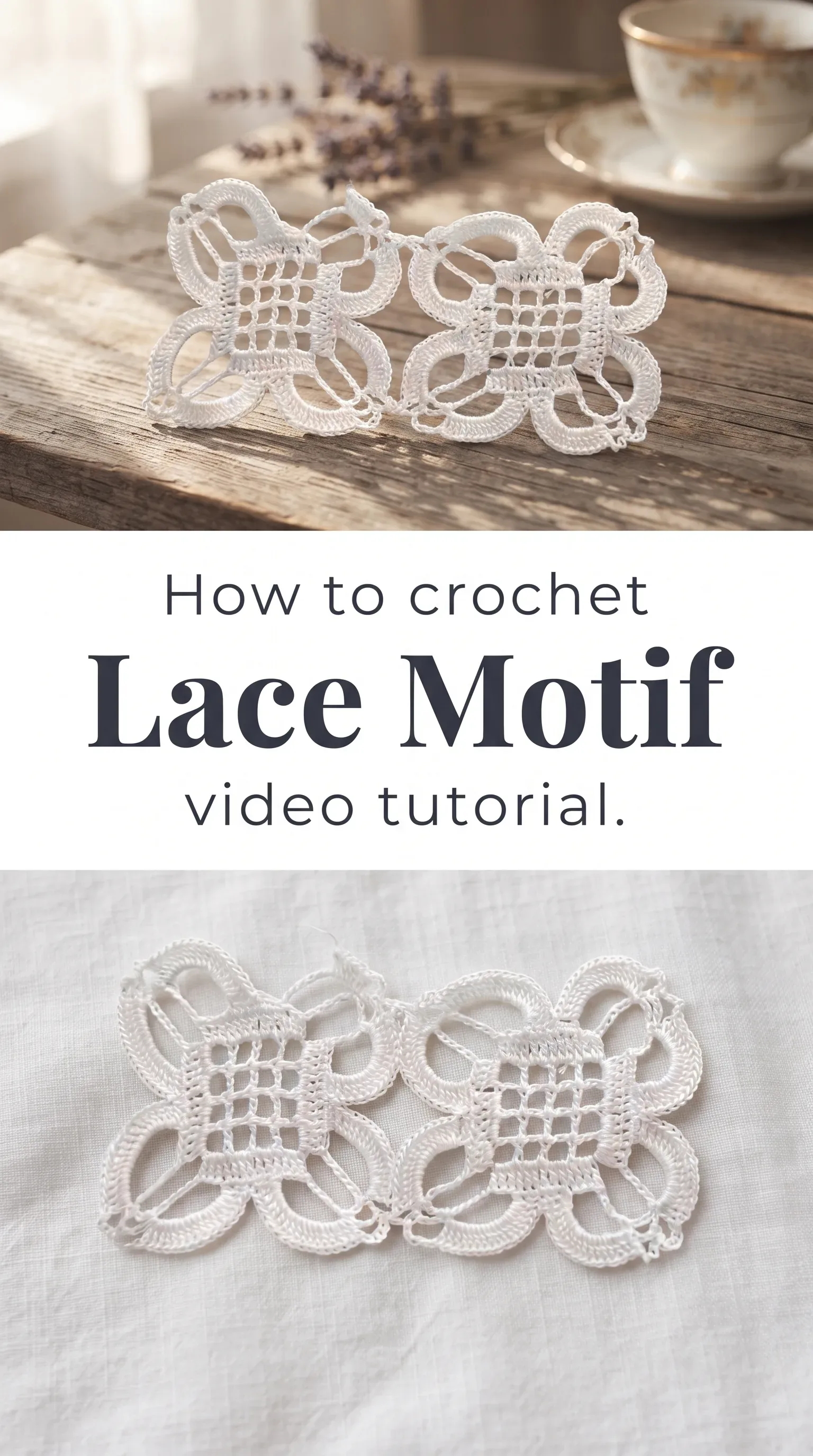
The Lace Motif
This crochet lace motif carries the kind of airy yet structured quality that makes you want to hold it up to the light and watch the open spaces breathe. Each finished motif reads almost like a four-petalled bloom pressed flat, its rounded outer loops framing a grid of neat mesh squares at the center, the whole thing whispering of antique linens and Sunday afternoon light through a gauze curtain. It suits the maker who appreciates slowness, who finds a meditative rhythm in the turn of a hook and wants something genuinely beautiful to show for it. Whether you are working your first lace project or returning to thread crochet after years away, this pattern meets you where you are.
Lace Motif Related Posts:
- Crochet Table Runner and Bedspread Motif: A Timeless Classic
- Crochet Flower Coasters: A Cheerful Spring Addition
- Crochet Paw Print Mat: A Playful and Cozy Accent
- Crochet Paw Coasters: A Playful Pet-Inspired Touch
Classic white is the natural choice here, and the images from Swan Crochet show exactly why: the pale thread catches light softly and lets every loop and arch read with total clarity. But this crochet lace motif also comes alive in ecru, dusty blush, or the kind of faded sage that looks as though it has always lived on a cottage windowsill. If you are joining multiple motifs into a longer piece, working alternating motifs in two very close tones, like ivory and warm cream, adds gentle depth without breaking the delicate mood.
Materials and Tools
For a motif that holds its open structure without going limp or pulling tight, reach for a fingering weight or size 10 crochet cotton thread, the kind with a smooth, lightly mercerized finish that gives the loops their characteristic gentle sheen. Swan Crochet works this design with a fine white cotton that behaves beautifully under tension, and a 1.5mm to 1.75mm steel crochet hook is the right pairing for that thread weight, giving you firm stitches that still have a little life in them. If you prefer a slightly more relaxed drape, a sport weight cotton with a 2.5mm hook produces a larger motif with the same structural clarity. Keep a set of stitch markers nearby to track your joining points when you link multiple motifs, and a blunt-tipped tapestry needle will make weaving in those fine thread ends far less fiddly.
Stitch by Stitch
This crochet lace motif draws on a small, well-chosen vocabulary of stitches that layer together into something far more intricate than any single stitch suggests on its own.
BULLET:CH (Chain) The foundation of every open loop and picot arch in the motif, giving the lace its characteristic breathable structure.
BULLET:SC (Single Crochet) Used to anchor chain loops at joining points and to close the petal arches neatly against the motif edge.
BULLET:DC (Double Crochet) The workhorse of the central mesh grid, forming the vertical columns that give the motif its defined, grid-like interior.
BULLET:TR (Treble Crochet) Adds height to the outer petal curves, letting those rounded arches push outward and hold their full, generous shape.
Once you find the rhythm of building a chain arch, anchoring it with a SC, then climbing back up with DC and TR, the whole piece settles into a satisfying loop that feels almost automatic, the kind of quiet, repetitive making that clears the mind.
Construction
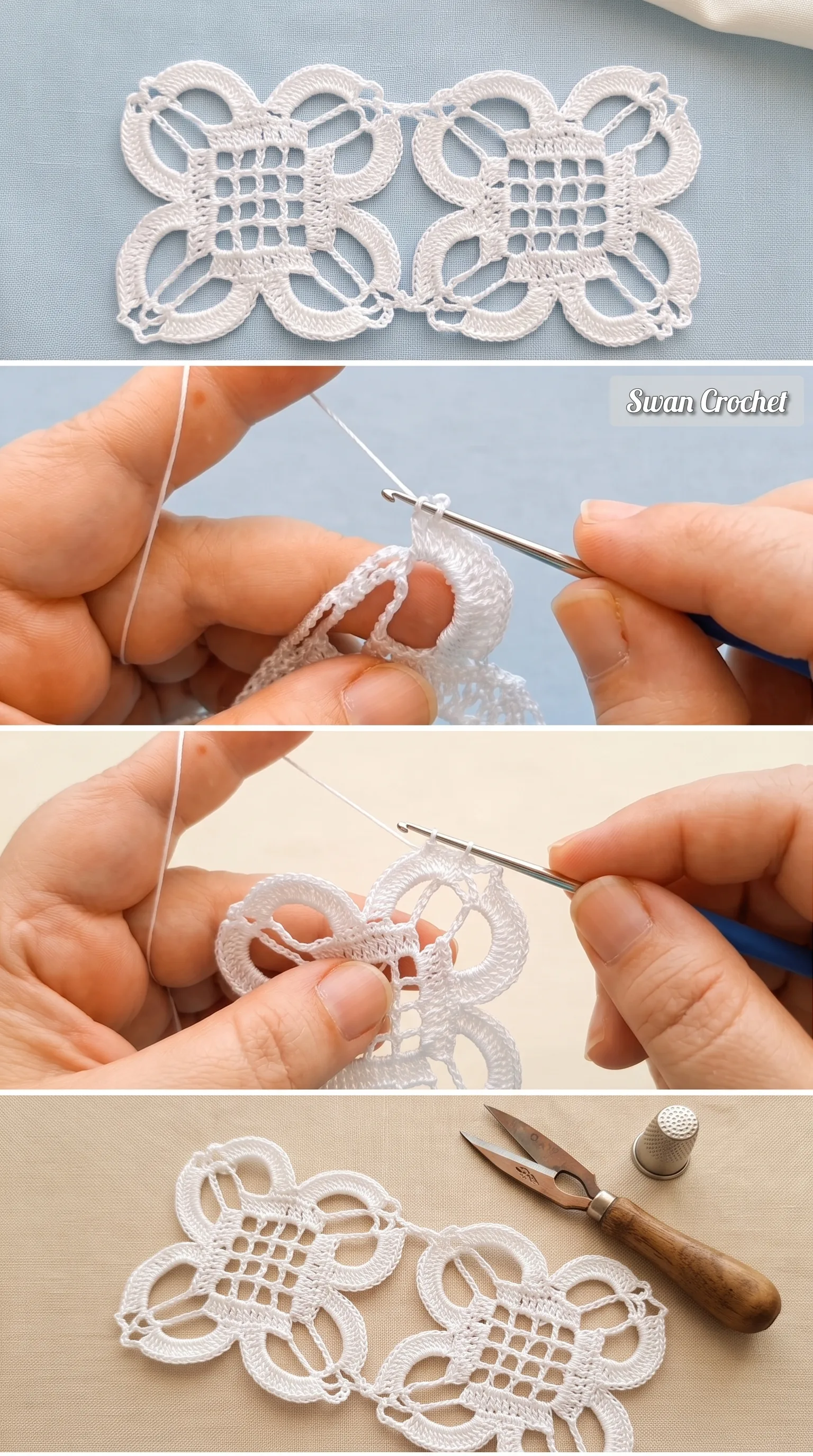
Each individual crochet lace motif is worked in the round from a small central ring, building outward through the mesh grid rows before finishing with the characteristic outer petal loops. The full step-by-step technique is demonstrated in the Swan Crochet video tutorial, which walks you through every round with clear close-up footage of the hook placement and thread tension. Once you have completed two or more motifs, they are joined at the outer petal points using a slip stitch or SC join worked directly into the corresponding arch of the neighboring motif, so no sewing is needed after the fact. You can adjust the scale of your finished piece simply by deciding how many motifs to join, making a short trim of two, a bracelet-style strip of four, or a wide panel of dozens.
Wearing Your Lace Motif
A single finished crochet lace motif stitched onto the collar of a linen blouse transforms an everyday piece into something you will reach for on purpose. Join four motifs in a short strip and you have a delicate choker-style necklace that sits beautifully against bare skin in summer. A longer joined panel becomes an heirloom-quality trim for the hem of a slip dress, the edge of a linen tablecloth, or the border of a handmade bookmark tucked into a much-loved book.
Blocking and Storing Your Lace Motifs
Wet blocking is the step that transforms a freshly finished crochet lace motif from something merely pretty into something that looks considered and intentional. Soak the finished piece in cool water for ten minutes, press out the excess gently in a clean towel, then pin each outer petal loop open on a foam blocking mat and leave it to dry completely, which can take several hours depending on your thread weight. Once dry and unblocked, cotton lace holds its shape reliably, but store flat rather than folded to prevent permanent crease lines forming across those open chain spaces. If the piece ever needs refreshing, a very light steam from an iron held a few centimeters above the surface will lift any flatness without distorting the structure.
Every crochet lace motif you finish is a small, enduring thing made entirely by your own hands, carrying the particular quality that only handmade objects have. Save this article to your Pinterest boards and share your finished motifs with the tag Swan Crochet so the wider handmade community can find this pattern too.
Follow us on Pinterest and subscribe to the Newsletter so you don’t miss a thing!
Tutorial and photos of this lace motif by: Crochet Swan.