
The Crochet Herringbone Stitch builds its signature look through interlocking diagonal columns that seem to lean into one another like rows of braided wheat, producing a fabric that is airy yet structured, with a satisfying depth that shifts under light. From cushion covers to table runners, scarves to headbands, this single repeating pattern opens up an entire wardrobe of home decor and wearable possibilities.

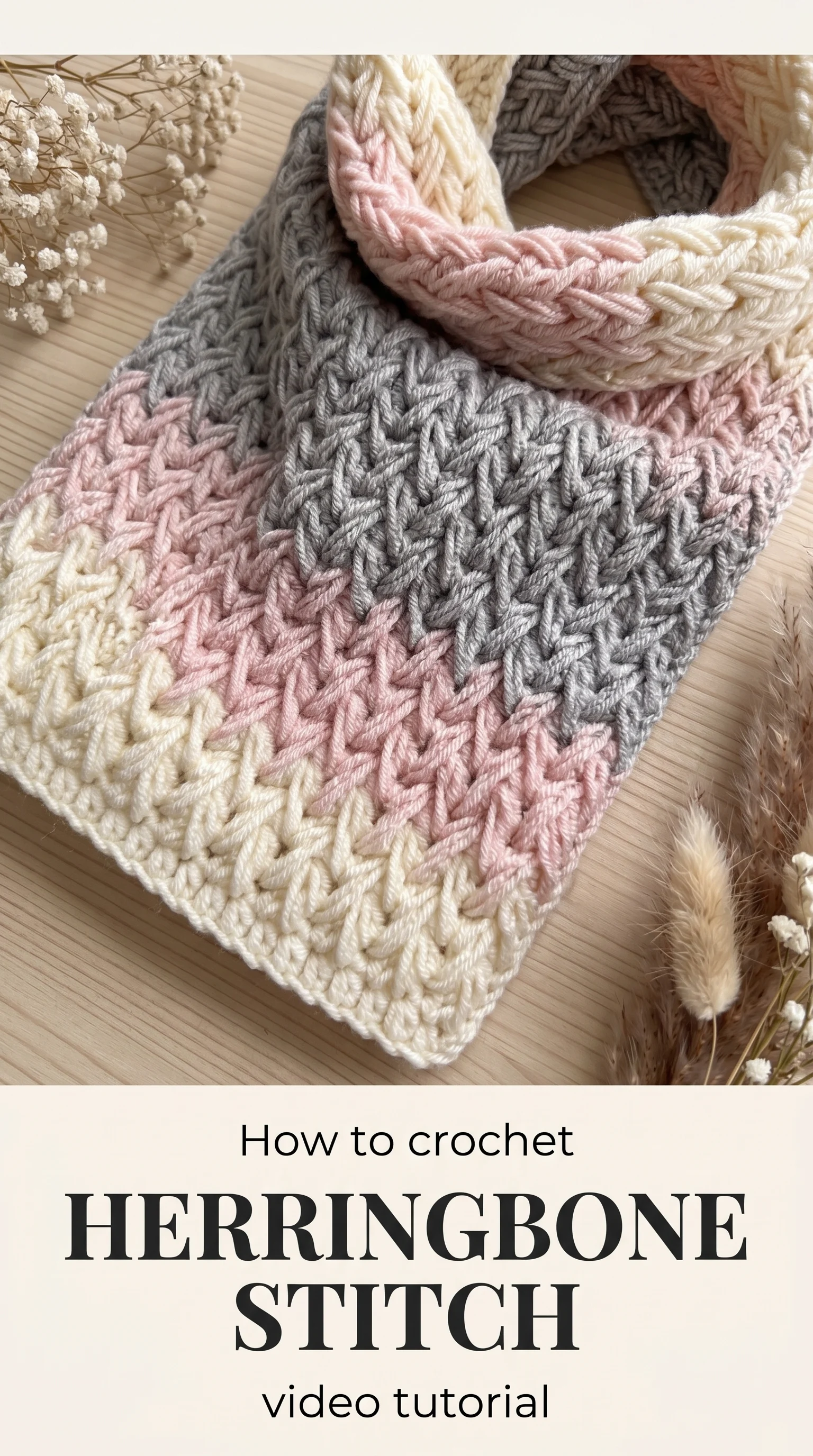
The Herringbone Stitch
The Crochet Herringbone Stitch carries the kind of quiet authority that makes a finished piece look far more complex than the hours spent making it. Each row builds in a meditative rhythm, the hook moving at a consistent diagonal angle that draws the eye across the fabric in gentle, rolling waves. It suits anyone who loves texture without bulk, structure without stiffness, and a whisper of elegance in their handmade work. Whether you are new to textured stitches or returning to crochet after a long pause, this pattern welcomes you with open rows.
Herringbone Stitch Related Posts:
- Crochet Floral Granny Square: A Timeless Classic Motif
- Crochet Dog Coaster: A Charming Kitchen Companion
- Crochet Hemp Leaf Doily: A Delicate Circular Masterpiece
- Crochet Flower Stitch: A Versatile Textured Design
The colorwork possibilities here are genuinely exciting. As seen in the reference images, working this stitch in a gradient yarn that moves through cream, blush pink, and soft grey creates an ombre effect that feels deeply modern and quietly romantic at once. You could also work it in a single tonal color to let the texture speak entirely for itself, or choose two contrasting shades and alternate them every two rows for a graphic, contemporary stripe.
Materials and Tools
For a fabric with the plush, well-defined texture visible in the finished swatch, a worsted weight yarn in a smooth, tightly plied construction is the ideal choice. Smooth fibers such as mercerized cotton, bamboo blend, or a soft acrylic worsted allow the diagonal lines of the Crochet Herringbone Stitch to sit cleanly without the stitch definition being lost in a halo. Pair your yarn with a 5mm crochet hook, which gives enough ease for the hook to slide through stitches comfortably during the YO pull-through technique this stitch relies on. A yarn needle for weaving ends is the one additional tool you will reach for at the finish, and it is worth having a blunt-tipped one on hand to keep your stitch columns undisturbed.
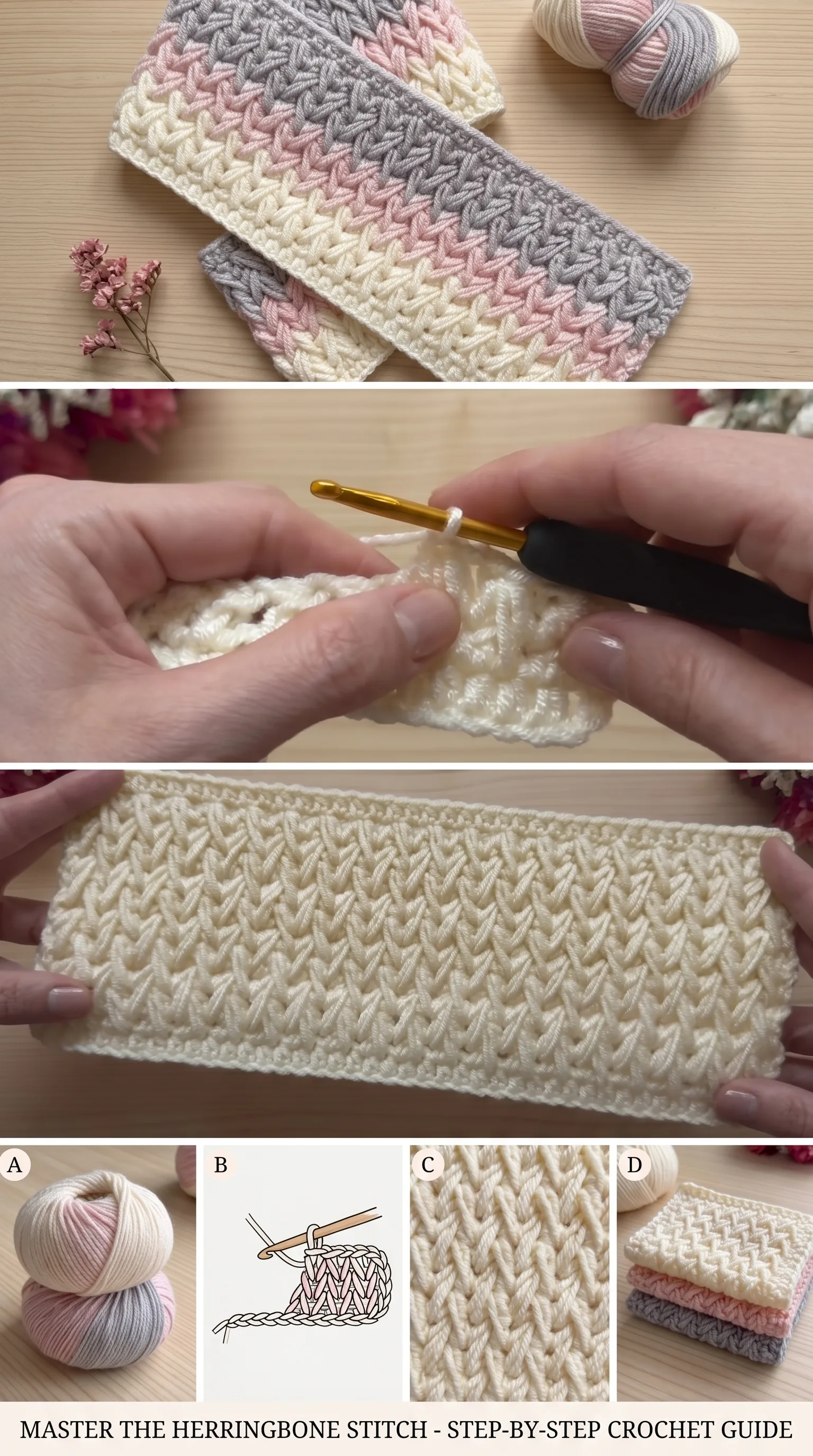
Stitch by Stitch
The Crochet Herringbone Stitch draws from a small, friendly vocabulary of techniques that combine to create something genuinely special.
BULLET:CH (chain) The foundation chain sets your width and establishes the count from which all diagonal columns grow.
BULLET:SC (single crochet) Used at edges and turning points, the SC anchors each row and keeps the sides of your fabric clean and even.
BULLET:DC (double crochet) The standard DC forms the base of the herringbone variation, providing the height and lean that gives the stitch its directional quality.
BULLET:YO (yarn over) The specific YO pull-through technique at the heart of this stitch is what creates the interlocked diagonal look rather than a standard upright post.
Once your hands learn the particular pull of this stitch, the work takes on a genuinely meditative rhythm, the kind where an entire evening passes and you look down to find a long, beautiful swatch waiting in your lap.
Construction
The piece is worked flat in horizontal rows, turning at each end, which makes it one of the most straightforward constructions for a beginner to follow without losing their place. The full step-by-step row guidance, including the set-up rows and the repeat, is covered in detail in the video tutorial from Massive Crochet, where every hand movement is shown clearly and at a learnable pace. Because the stitch repeat is consistent once established, it is easy to adjust your starting chain to make a wider or narrower piece to suit any project from a slim headband to a generous throw panel. To customize the finished size without changing the stitch, simply add or subtract in multiples of the base repeat count before you begin.
Wearing Your Herringbone Stitch
A swatch worked in the Crochet Herringbone Stitch in cream worsted makes an effortlessly beautiful ear warmer or wide headband, the kind you reach for on a cool morning with a linen shirt and tall boots. Worked wider and longer, the same fabric becomes a cozy scarf or a textured cushion cover that gives a living room an artisan, slow-made quality without a single seam to fuss over. Finishing your first project in this stitch will almost certainly send you straight back to your yarn stash to plan the next one.
Washing and Storing Your Herringbone Pieces
Because the Crochet Herringbone Stitch produces a fairly dense, layered fabric, it benefits from a gentle hand wash in cool water with a mild wool-safe soap to preserve the definition of those diagonal columns. Lay the piece flat on a clean towel and reshape it by hand while damp, smoothing the rows back into alignment before leaving it to air dry away from direct heat or sunlight. For cotton or acrylic blends, a delicate machine cycle in a mesh laundry bag is usually safe, but always defer to the yarn label for the final word. Store finished pieces folded rather than rolled to prevent any distortion of the stitch structure over time.
Every row of this stitch is a small act of making something lasting and beautiful with your own hands, and that is worth every moment you give it. Save this post to your crochet inspiration board and share your finished makes with the tag so the whole community can see your gorgeous work.
Follow us on Pinterest and subscribe to the Newsletter so you don’t miss a thing!
Tutorial and photos of this herringbone stitch by: Massive Crochet.