
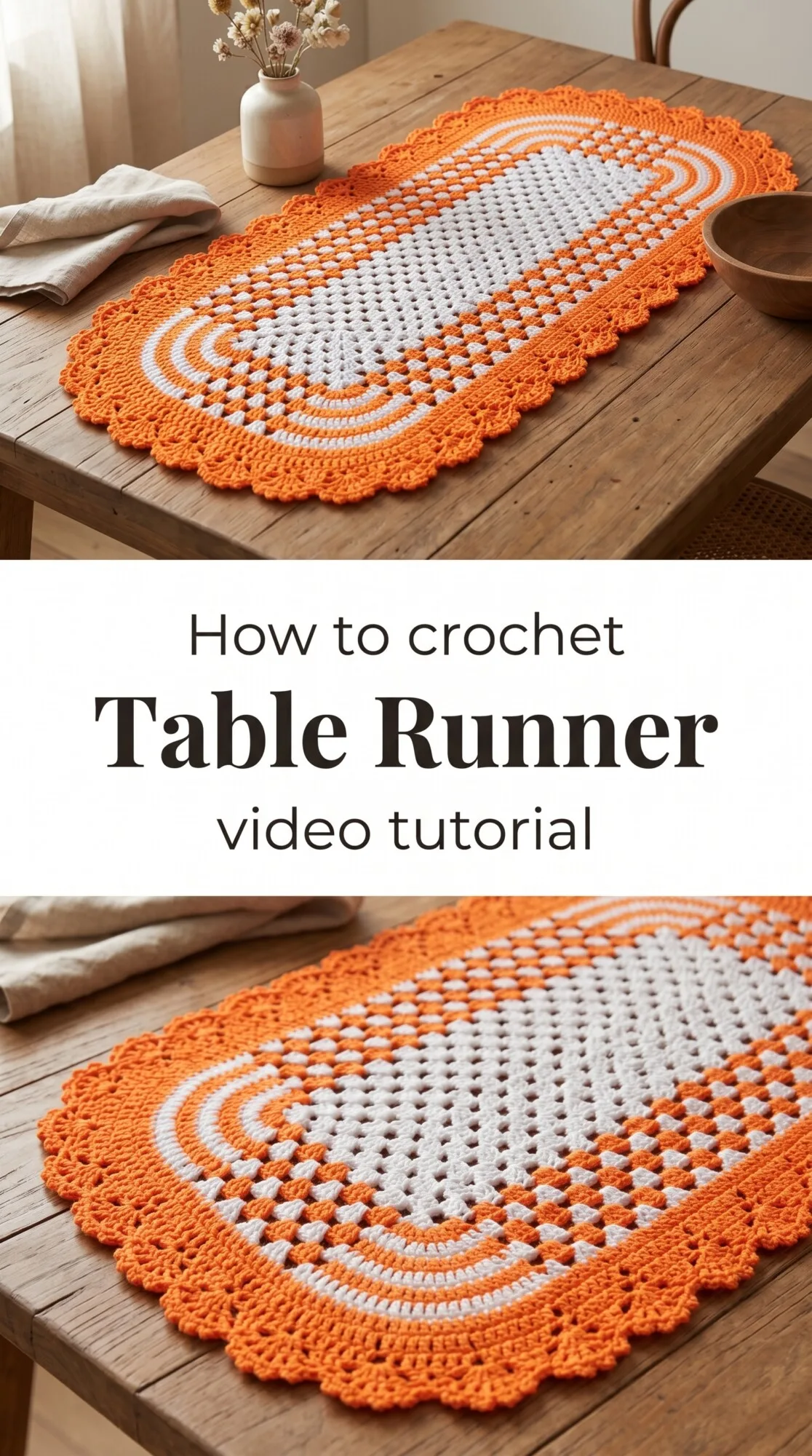
A rectangular crochet table runner built from concentric oval rounds of granny clusters and solid stripes opens up a world of handmade home styling that reaches far beyond the dining table.

The Table Runner
This crochet table runner carries the kind of quiet presence that makes a room feel considered and loved. The center blooms with an open granny-cluster body worked in soft white, surrounded by bold orange stripes that pulse outward in alternating rounds, and the whole piece is finished with a scalloped picot border that gives the edge a lacy, celebratory feel. It is at once airy yet structured, light enough to let the table beneath it breathe while still anchoring the space with color and handmade warmth. Whether you are drawn to it for a kitchen sideboard, a console table, or a breakfast nook, this is a piece made for people who believe that everyday objects deserve beauty.
Table Runner Related Posts:
- Crochet Lace Doily: A Delicate Decorative Accent
- Crochet Leaf Dishcloth: A Fresh and Eco-Friendly Essential
- Crochet Twisted Coaster: A Charming Table Essential
- Crochet Lace Doily: An Elegant Table Centerpiece
The orange and white palette shown here is vivid and joyful, evoking sun-warmed afternoons and hand-thrown ceramics, but this design reads beautifully in almost any two-color combination. Imagine it in dusty sage and cream for a botanical dining room, or in deep terracotta and ivory for an autumn table setting that feels genuinely seasonal. The two-color rhythm is what makes the striped border feel graphic and intentional rather than busy, so lean into contrast and let the colors do the conversation.
Materials and Tools
For a crochet table runner with this kind of crisp stitch definition and satisfying drape, reach for a DK weight cotton yarn in two contrasting colors. Cotton is the fiber of choice here because it holds its shape through repeated washing, gives the DC clusters that neat, almost architectural edge, and lies beautifully flat without blocking gymnastics. A 3.5mm crochet hook is the sweet spot for DK cotton at this gauge, keeping the fabric firm enough to stay flat on the table without being stiff. Keep a locking stitch marker nearby to track your round joins, and a blunt tapestry needle to weave in the color-change ends cleanly as you go.
Stitch by Stitch
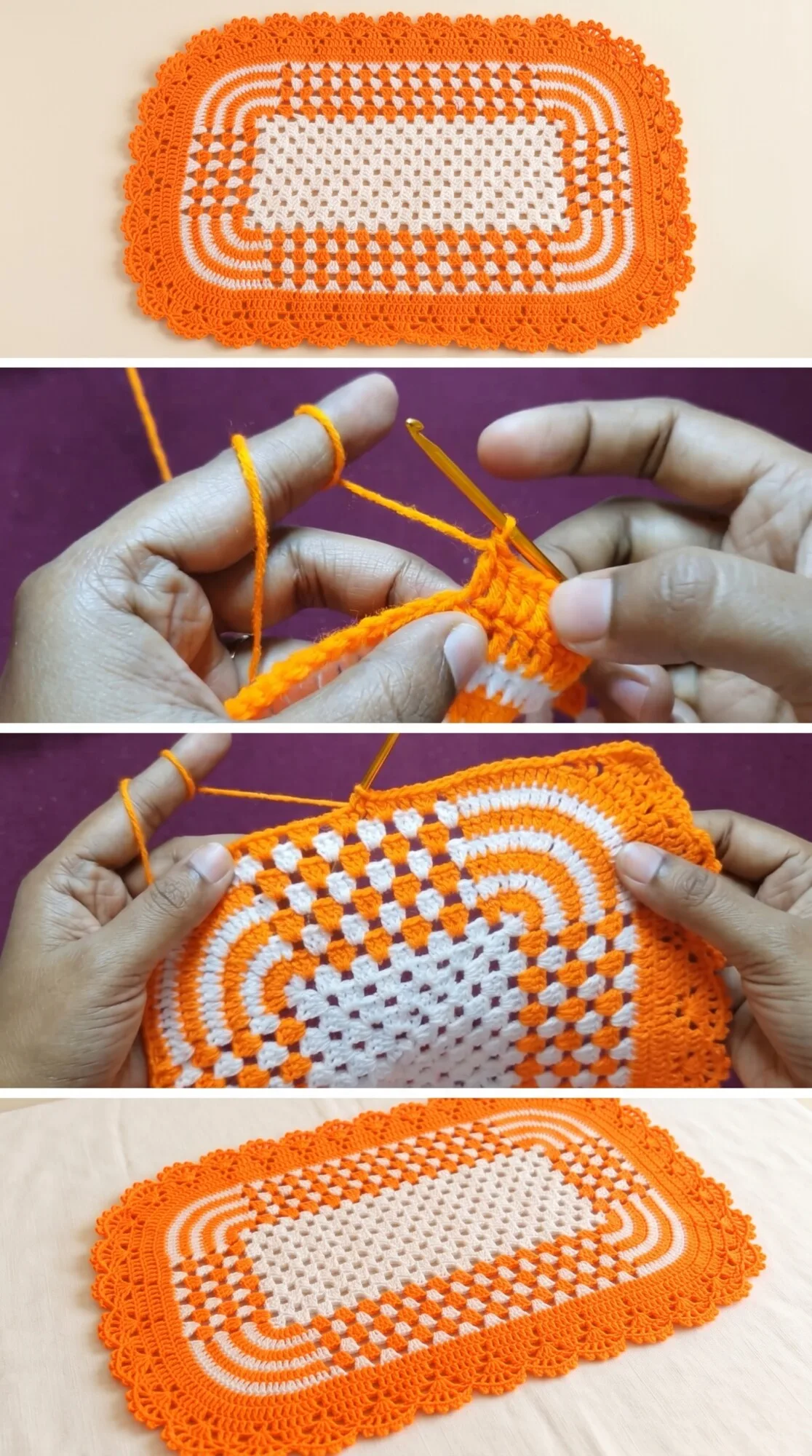
This crochet table runner draws on a small, friendly vocabulary of stitches that even a relative beginner will settle into quickly.
BULLET:CH (Chain) The foundation of each new round and the turning chain that sets the height of your DC clusters.
BULLET:SC (Single Crochet) Used along the solid stripe rounds and within the border to create a dense, tidy line between the open cluster sections.
BULLET:DC (Double Crochet) The workhorse of the granny cluster body, grouped in threes to form the open lattice that fills the center of the runner.
BULLET:SL ST (Slip Stitch) Works the round joins and navigates the hook into position at the start of each new round without adding height.
The meditative rhythm of working DC clusters in rounds, joining, then switching color for a SC stripe, creates a satisfying call and response that carries you from the first oval center all the way out to the scalloped edge almost without noticing how much ground you have covered.
Construction
The runner is worked in the round from the center outward, beginning with a chain foundation that establishes the oval shape. From that first oval, rounds of three-DC granny clusters build up in white, with orange SC stripe rounds woven between them at regular intervals to create the bold concentric striping visible in the finished piece. The construction is forgiving for beginners because each round is a self-contained step, and if a round does not look quite right you simply remove it and rework it without disturbing the rest of the piece. To customize the size, simply add or remove rounds of clusters before moving into the solid orange outer border and picot edging. The full step-by-step video tutorial from Mojina Crochet and Crafts walks you through every round in clear, close-up detail, and I strongly recommend watching it alongside these notes.
Wearing Your Table Runner
Lay this crochet table runner down the center of a dining table and surround it with candles and a simple vase for an everyday setting that feels occasion-worthy without any effort. It works equally well draped across a sideboard beneath a lamp, or folded over the back of a bench in a hallway where its scalloped edge becomes a decorative detail in its own right. Finishing this piece will make you want to gift it, display it, and immediately start the next one in a different colorway.
Keeping Your Table Runner Flat and Fresh
Because this runner is worked in cotton, it responds very well to a gentle hand wash in cool water with a small amount of mild detergent, rinsed thoroughly and laid flat on a clean towel to dry. Pin it gently into its rectangular shape while damp if any of the outer rounds have pulled slightly, and allow it to dry completely before placing it on the table. Cotton can tolerate a cool machine wash on a delicate cycle if you use a mesh laundry bag, which makes this a practical choice for everyday use rather than a piece reserved only for special occasions. Store it flat or loosely rolled, never folded on a hard crease, to keep the picot border from developing stubborn kinks.
Every round of this crochet table runner is a small act of making something the world does not mass-produce, and the finished piece carries that handmade sincerity in every cluster. Save this post to your Pinterest boards and share your finished runner so the community can celebrate it with you.
Follow us on Pinterest and subscribe to the Newsletter so you don’t miss a thing!
Tutorial and photos of this table runner by: Mojina crochet and crafts.