
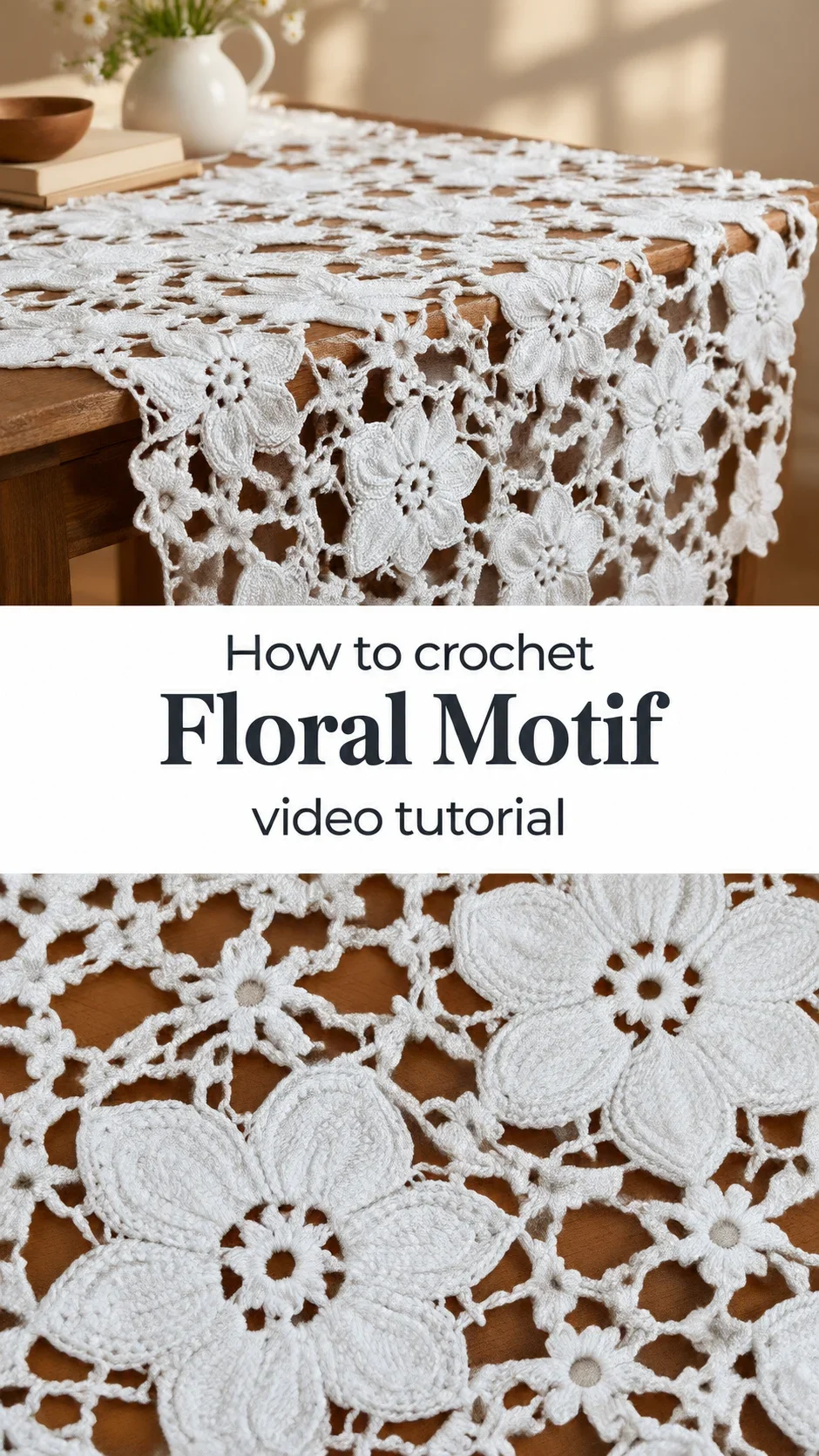
Each petal of a crochet floral motif is built from a compact center ring, with raised, sculpted petals fanning outward in structured SC and DC relief that catches light like carved ivory. This single repeating motif unlocks doilies, table runners, full lace tablecloths, garment panels, cushion covers, and framed textile art.

The Floral Motif
The crochet floral motif is one of those rare patterns that feels both antique and achingly current, the kind of thing you might find pressed between the pages of a grandmother’s recipe book and then spot in a high-end linen boutique the very same afternoon. Each motif is a self-contained bloom, petals slightly dimensional and airy yet structured, joined to its neighbors through delicate chain-and-picot bridges that form a lacy web between them. The finished fabric has weight and presence without heaviness, draping with quiet confidence across a table or a shoulder. It speaks to makers who love detail, who find satisfaction in a petal that lies perfectly flat after blocking.
Floral Motif Related Posts:
- Crochet Suzette Stitch: A Textured and Timeless Technique
- Crochet Versatile Stitch: A Universal and Elegant Design
- Crochet Hook Case: A Clever and Organized Essential
- Crochet Jacob’s Ladder Stitch: A Beautiful Textured Design
In classic white or ivory cotton the crochet floral motif reads as deeply traditional, the kind of heirloom piece that earns a permanent spot on a Sunday dinner table. Shift into soft sage, dusty rose, or warm ecru and the same motif becomes something altogether more romantic and modern, the sort of thing that photographs beautifully against linen and raw wood. You could even work individual motifs in graduated tones across a large piece for a subtle ombre wash of color that feels considered and slow.
Materials and Tools
For a result as crisp and defined as the one in the reference images, reach for a fingering weight or sport weight cotton yarn, something with a smooth, mercerized finish that will show every SC and DC in clean relief. A 2mm or 2.5mm steel crochet hook is ideal for fingering weight cotton thread, giving you the tightness needed to shape those sculptural petals without the fabric pulling or collapsing. If you prefer a slightly softer drape or are new to fine thread work, a 3mm hook with sport weight cotton is a forgiving and very beautiful alternative. A good stitch marker and a tapestry needle for weaving ends are the only other tools you will reach for again and again throughout this project.
Stitch by Stitch
The crochet floral motif draws on a focused vocabulary of stitches that builds into something far greater than the sum of its parts.
BULLET:SC (Single Crochet) The workhorse of the center ring and petal edges, SC creates the tight, smooth base from which the whole bloom grows.
BULLET:DC (Double Crochet) Used across the body of each petal, DC adds height and a gentle drape that gives the flower its open, lacy character.
BULLET:YO (Yarn Over) Every DC begins with a YO, and understanding the tension of this movement is what keeps your petals consistent and even.
BULLET:Slip Stitch Used to close rounds and join motifs at their picot points, the slip stitch is quiet and almost invisible, exactly as it should be.
There is a meditative rhythm to working this motif once the petal sequence settles into your hands, a turn and count and turn that slows the mind in the best possible way.
Construction
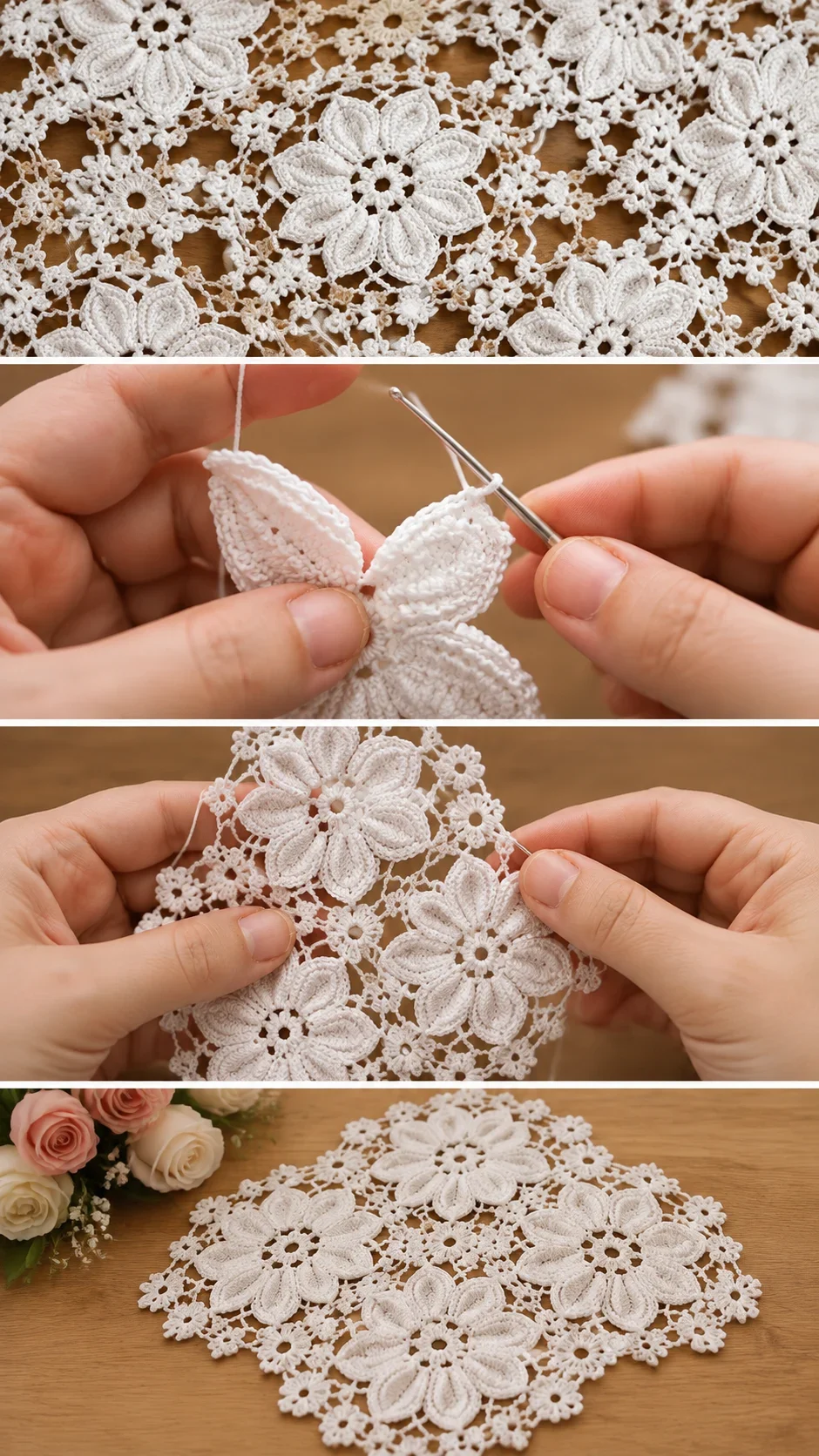
Each crochet floral motif begins at the center with a magic ring or a small foundation chain closed into a loop, from which the initial SC stitches radiate outward to anchor the first round of petals. The second image from the tutorial shows the petals being worked individually before they are drawn together at their tips, a construction method that gives each petal that satisfying three-dimensional lift. As the tutorial demonstrates with the notation 2 sc plus 8 sc, counts are small and manageable, making this approachable even if you are relatively new to working in the round. Once you have made three or four individual motifs, joining them through their outer picot points is straightforward, and you can expand the finished piece to any size you like by simply continuing to add blooms.
Wearing Your Floral Motif
A single large crochet floral motif blocked and starched makes an extraordinary coaster or drink mat, while four joined together form a placemat that will outlast any printed cotton alternative you have ever bought. A runner of six to eight motifs across a farmhouse table, layered over raw linen, creates the kind of atmosphere that makes an ordinary weeknight dinner feel considered and beautiful. For the adventurous maker, a panel of joined motifs sewn onto a simple cotton camisole transforms it into a piece that feels artisan and irreplaceable.
Blocking and Caring for Your Floral Motif Lace
Cotton crochet lace rewards the effort of wet blocking more than almost any other fiber, so once your motif or joined piece is complete, soak it in cool water, gently press out the excess without wringing, and pin each petal to a foam mat to dry fully before removing the pins. This single step transforms a slightly uneven piece into something that looks professionally made, the petals opening up and the picot bridges settling into their true shape. For washing, a gentle hand wash in cool water with a small amount of mild detergent is all that is needed, and the piece should be re-blocked flat each time to maintain its shape. Store finished lace flat or loosely rolled in acid-free tissue rather than folded, to prevent permanent crease lines forming across the petals.
Your hands made something that will outlast trends, fast furniture, and fast fashion alike, and that is worth every careful stitch. Find the full video tutorial that inspired this pattern, save this post to your crochet Pinterest board, and share your finished motif with the tag so the whole community can see what you made.
Follow us on Pinterest and subscribe to the Newsletter so you don’t miss a thing!
Tutorial and photos of this floral motif by: Crochet Swan.